Sidebar

Lithuanian Language Courses

Contacts

Testing

Timetables

News

Staff & Activities

Projects

Contacts

Publications

Naujienos

2025


  • Lucia celebration will take place in Vinco Krėvės room, at 18:00, on 12th December.

  • Congratulations to our colleague Rūta Šileikytė-Zukienė, who has defended her PhD thesis The Influence of Neoplatonic thought in the Old English Boethius on 21st November! Find the thesis here.

  • Professor Henrik B Andersen will visit the Scandinavian Center to give a talk about the Danish painter Vilhelm Hammershøi and contemporary Danish art on November 26 at 13.00 in room 314ABPlease see the attached invitation.

  • You are all cordially invited to a seminar in English by a distinguished guest: profesor Catrin Norrby from Stockholm University. She is a sociolinguist and will talk about the complex relationship between nation, culture and language on the example of Swedish in Finland and Sweden.


    The talk will take place Friday 31 October, 15:00, room 402. Please find the poster, including a short summary of the talk here.

  • 10 och 11 november gästas Skandinavistikos centras av LARS RING (Stockholm) – teaterkritikern och kulturjournalisten på Svenska Dagbladet. Han kommer att föreläsa om två av de viktigaste figurerna i det svenska kulturlivet under det senaste halvseklet: poeten och dramatikern KRISTINA LUGN (1948-202o) och dramatikern LARS NORÉN (1944–2021).

    KRISTINA LUGN lät plocka isär språket för att sätta ihop det igen. Hon fick det ljuda på andra sätt med andra valörer och lät det bli en förunderlig saga om kvinnor, ensamhet, skam och förort. Dikt som teater, poesi som komisk tragedi.

    10 november, måndag, kl. 13.00, rum 314 AB (på svenska)
    LARS NORÉN är antagligen Sveriges främste dramatiker – men också del av en mycket svensk psykologisk tradition – från August Strindberg, över Ingmar Bergman till idag. Han slog igenom 1984 med ”Natten är dagens mor”. Lars Ring har följt hans konstnärliga utveckling från starten och berättar om olika faser, formspråk och hans utveckling – språkligt och ämnesmässigt.

    11 november, tisdag, kl. 13.00, rum 314 AB (på svenska)
    LARS RING har studerat teatervetenskap vid Stockholms universitet och arbetat som dramaturg på Radioteatern. Han har arbetat som teaterkritiker och kulturjournalist på Svenska Dagbladet sedan 1984 och är ännu verksam. Har medverkat till en lång rad teaterantologier (senast – Genius loci, om platsens magi med Martha Westin, Sven Delblancsällskapets årsskrift, samt en text i hyllningsboken om Unga Dramaten 25 år.)

    Besöket och föreläsningarna finansieras av Svenska institutet.

  • Atšaukta, atsiprašome už nepatogumus. Spalio 10 d. 17:00 val. kviečiame prisijungti prie virtualios paskaitos "Welfare, Motherhood, and Nationalism: The Swedish Example". Ją skaitys dr. Soheyla Yazdanpanah iš Södertörno universiteto.

    Daugiau informacijos: čia.

  • We are pleased to announce that we shall meet our first guest speaker Yulia Gradskova (see the details below) at 17.00 o'clock this Thursday (25th). She will be joining us online (and you may join remotely). More information - here.

    The title of the Yulia's lecture is: "Using media resources for analysis of women’s representations: RF’s “traditional values” and resistances to them"

  • Henrik Ibsen Seminar Oct. 3 – it will be a half day event, with a guest from Uni of Washington Prof. Olivia Noble Gunn and our own colleagues presenting and discussing Ibsen. More information here.

  • We invite you to a special lecture "Education in Two Languages" by Prof. Kim Potowski, a renowned U.S. sociolinguist who works on bilingualism, heritage languages, and education for national minorities. It will take place on 2nd October, at 15:00, in Room 314. More information here.

  • Lecture “Communist Lives in Cold War Iceland” with prof. Rósa Magnúsdóttir (University of Iceland) will take place on 30th September, at 17:00, in Room 314. More information here.

  • Academia Nordica – edukacinė diena 10-12 klasių moksleiviams, vyksianti spalio 4 dieną, 13:00, Universiteto g. 5 (Filologijos fakultete), 92 auditorijoje.

  • Išėjo naujas ,,Scandinavistica Vilnensis" serijos leidinys, rinkinys ISLANDŲ SAGOS. Jo sudarytoja ir vertėja iš senosios islandų kalbos – Rasa Ruseckienė – pirmoji VU Skandinavistikos centro islandų kalbos ir literatūros dėstytoja.

  • BA defence is upon us on 4th and 5th June! Please find the programmes and the links for joining online here: Day 1 and Day 2.

  • We invite you to the presentation The Icelandic Dream: The Gaze of Victorian Women Travellers by Auksė Beatričė Katarskytė. The talk will take place on Wednesday, 14th of May, at 3 30 PM in Room 314A. More information here.

  • Balandžio 30 d., trečiadienį, 14.30 kviečiame visus susitikti Simono Daukanto kieme ir džiaugsmingai – dainomis ir laužo liepsnom – išvyti žiemos likučius ir įtvirtinti pavasario atėjimą pagal švediškas Valborgo (šv. Valpurgijos) šventės tradicijas.

  • Student conference will take place on 4th April. Please find the programme here.

  • 🏳️‍🌈  Conference "Queer in Nordic Literature" will take place in Vilnius University, Room 92, on April 10th–11th, 2025. Please find the programme here.

  • Kviečiame į Bengt Jangfeldt paskaitą The Nobel Family: Not Only Alfred But One of Europe’s Biggest Industrial Dynasties
    📌 kovo 20 d. 11:00, VU Filologijos fakulteto Z.Zinkevičiaus (92) aud.

    Kartą metuose visų šalių akys krypsta į Švediją, nekantriai laukiant žinios, kam gi šiais metais bus skirta Nobelio premija – vienas garbingiausių apdovanojimų pasaulyje. Dauguma žino, kad Alfredas Nobelis buvo iškilus mokslininkas ir dinamito išradėjas, bet nedaug kas girdėjo, kad jis priklausė genialių žmonių šeimai, su unikalia, intriguojančia istorija.

    Bengt Jangfeldt knyga Immanuel Nobel & Söner: Svenska snillen i tsarernas Ryssland (2020; Immanuelis Nobelis ir sūnūs: švedų genijai carinėje Rusijoje) yra akademinis, patraukliai parašytas darbas apie Nobelių šeimą, jos reikšmingus darbus, išradingumą ir neįtikėtiną verslumą. Vertimas į anglų kalbą The Nobel Family: Swedish Geniuses in Tsarist Russia (2023) pateko į The Financial Times geriausių metų knygų sąrašą. Knyga taip pat išversta į rusų, azerų bei suomių kalbas.

    Knygos autorius Bengt Jangfeldt – žinomas Švedijos slavistas, rašytojas ir vertėjas, knygų apieB. Pasternaką, V. Majakovskį, O. Mandelštamą, J. Brodskį, A. Munthe, R. Wallenbergą ir daugelį kitų autorius, prestižinių literatūros premijų (dukart Augusto Strindbergo premijos – auksčiausio Švedijoje literatūrinio apdovanojimo, Švedijos akademijos premijos ir kt.) laureatas. Bengt Jangfeldt daug rašo ir Rusijos politikos ir istorijos klausimais: jo knyga Vi och dem. Bengt Jangfeldt om Ryssland som idé (2017; Mes ir jie. Bengt Jangfeldt apie Rusiją kaip idėją), prasidėjus 2022 m. karui, buvo išleista pakartotinai ir išversta į daugelį kalbų.

    2024 m. rudenį Bengt Jangfeldt viešėjo Vilniaus universitete ir sužavėjo auditoriją paskaitomis apie Raoul Wallenbergą ir Josifą Brodskį. Nuoširdžiai džiaugiamės jo grįžimu ir galimybe pristatyti šį puikų autorių platesnei auditorijai, šį kartą per jo pasakojimą apie iškiliąją Nobelių šeimą.

  • Director of the University of Latvia Livonian Institute dr. Valts Ernštreits is a Livonian-born linguist and language activist. He specializes in revitalization, development and digital empowerment of Latvia’s indigenous Livonian language. His research and community work has been widely acknowledged in Latvia and abroad. As a Livonian himself and one of the few speakers of the Livonian language, he has been involved with many activities – both physical and digital – focused on safeguarding and empowering Livonian language and heritage for over 30 years, also serving as a mediator between NGOs, governmental institutions, and academia. He is also a member of the Global Task Force for Making a Decade of Indigenous Languages (2022–2023). Dr. Valts Ernštreits will have 4 seminars on Livonian language and culture:

    🔹Monday, 17 March 15:00, 314 AB (in English; also online)
    Livonians – indigenous people of Latvia (introduction)

    🔹Tuesday, 18 March 13:00, 314 AB (in English, also online)
    Insight into Livonian language and it’s contacts

    🔹Wednesday, 19 March 15:00, (in English, only online)
    Livonians: tangible and intangible heritage

    🔹Thursday, 20 March 15:00, (in English, only online)
    Building Livonian future

    Please use this link to join the meetings.


  • Academia Nordica – edukacinė diena 10-12 klasių moksleiviams Skandinavistikos centre, Vilniaus universitete.

    Skaitote skandinaviškus detektyvus? Žiūrite serialus? Suomiško metalo klausotės? Girdėjote, kad Norvegija labai graži? Puiku, bet net jei ir ne – mūsų akademijoje išgirsite įdomybių apie Šiaurės šalių kalbas ir kultūras ir sužinosite, kaip visa tai galima studijuoti Vilniaus universitete.

    Renginys vyks kovo 15 dieną, 11:00, Universiteto g. 5, Vilniuje, 92 auditorijoje.

  • Monday 3 March our Swedish ambassador Lars Wahlund will visit Vilnius university. He will talk about the Swedish student organisations at universities called ”nationer”. The talk will be in Swedish and take place at 11 am in 314. Everyone who understands Swedish is welcome!

  • The Centre for Scandinavian Studies very pleased to invite you to a series of lectures by a visiting guest, Dr Yair Sapir, a senior lecturer in Swedish at the University of Kristianstad, Sweden. Focusing on the newly published grammar of Elfdalian, co-authored by Dr Sapir, his lectures will touch upon questions of the relationship between dialects and languages, endangered languages and language revitalization policies and practices. Please see the full schedule below:

    🔹On Tuesday, February 25 at 15.00 in the auditorium 402 at our Centre, he will give a lecture in English “Elfdalian of Northern Dalarna, Sweden – an Introduction”, please do come and join!

    🔹On Friday, February 28 at 11.00 in the auditorium 314A/B at our Centre, he will give a lecture in Swedish “En introduktion till älvdalska” --> alla svensktalande kollegor och studenter är hjärtligt välkomna!

    🔹On Friday, February 28 at 13.00 in the auditorium 314A/B at our Centre, a second lecture in English will follow “Elfdalian and Sweden’s Sámi Languages, Sweden’s Minority Language Policy”, everyone is welcome!

    “A Grammar of Elfdalian” published on 30 September 2024 can be downloaded here: https://uclpress.co.uk/book/a-grammar-of-elfdalian/
    Yair is a linguist with many hats (as you can see here: https://researchportal.hkr.se/en/persons/yair-sapir ), and we are delighted to have an opportunity to welcome him in person and learn about the amazing Elfdalian spoken in Sweden, which is a true treasure find for any linguist.
    Look forward to seeing you in person on February 25 and 28!

  • We are pleased to announce that acclaimed Norwegian author Zeshan Shakar will be visiting on the 17th of March. Shakar, known for his award-winning novels "Tante Ulrikkes vei", "Gul bok", and "De kaller meg ulven", has made a significant impact on contemporary Norwegian literature with his insightful and powerful portrayals of multicultural urban life.

    📅 Date: 17th March
    📍 Location: Room 314 AB
    🕒 Time: 13.00

    The event is open to all, and we encourage students, faculty, and literature enthusiasts to join us for an engaging and thought-provoking conversation.

    We look forward to welcoming Zeshan Shakar and hope to see you there!

2024

  • 🎄🎄🎄Lucia celebration will take place on 13 December, at Vinco Krėvės auditorium, at 18:00.

  • Lapkričio 29 dieną Rašytojų menėje atidaryta Rasos Baranauskienės fotografijų paroda.

  • Lapkričio 15 dieną, 10:30 mūsų centre lankysis biochemijos profesorius ir Nobelio premijos komiteto narys Johanas Åqvistas. Susisitikimas vyks 314 A auditorijoje, švedų kalba.

  • Torben Jelsbak (Copenhagen University) will be visiting us on the 20th of November. He will give two lectures:

    15:00 The Cultural Poetics of the Small State. From Scandinavian Modernity to the Idea of Pan-Europe. Room 314 and Teams.

    17:00 Putin’s War Against Women. Postcolonial Memory Politics in Sofi Oksanen. Room 314 and Teams.

  • On November 13 at 17.00, in Room 314, Dalia Satkauskytė will talk about sociocriticism: "Ką gali ir ko negali sociokritika".

  • Workshop by Guy Geffen (Copenhagen University) "AI tools in the Humanities: How can they help (or not)" will take place on November 13, at 17:00, in the auditorium 92 (Zigmo Zinkevičiaus) (Organizer Ringailė Trakymaitė)

  • Lapkričio 7-8 dienomis Skandinavistikos centre viešės Ugnius Vizgirda Mikučionis – filologas, senosios skandinavų literatūros tyrinėtojas ir vertėjas, lietuvių skaitytojams pristatęs sen. islandų Kniutlingų sagą (Knýtlinga saga – tai XIII a. danų karalių kronika, kurioje daugiau nei kitur pateikiama žinių apie baltų kraštus ir skandinavams grėsmę kėlusius kuršius), daugelio straipsnių ir pranešimų autorius, šalia kitų klausimų šiuo metu tyrinėjantis dar ir pasakojimus apie dvergus skandinavų mitologijoje.

    Ugnius mums skaitys dvi paskaitas, todėl jau dabar pasižymėkite ir planuokite:

    Skaldų poezijos vertimai šiuolaikinėse kalbose
    Data ir laikas: lapkričio 7 d. (ketvirtadienis) 11 val.
    Vieta: 92 aud.

    Daugiakalbystė senovės islandų sagose (anglų k.)
    Data ir laikas: lapkričio 8 d. (penktadienis) 15 val.
    Vieta: K. Donelaičio aud.

    Visų labai lauksime! ☀️

  • Marika Lagercrantz besöker oss 5 november, 13:00, Rum 314. Den kända svenska skådespelerskan Marika Lagercrants kommer på besök tisdag 5 november för att tala med studenterna om svenska språket i film.

  • PhD Vesa Jarva from University of Jyväskylä is visiting us this week. He will give a lecture about Finnish spoken and colloquial language in English on 21st October, at 13:00, in Room 118. He will also have further lessons with the students of Finnish language throughout the week.

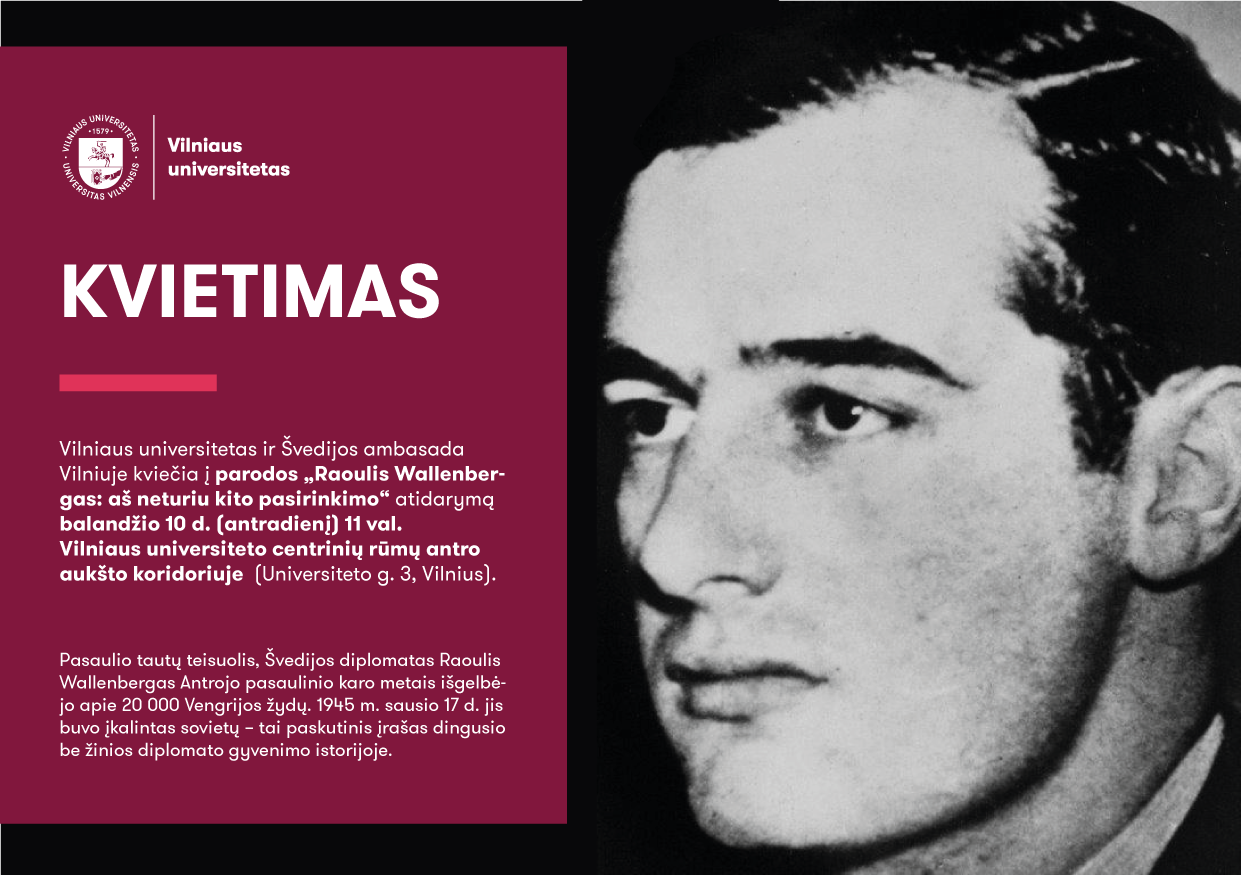
  • Kviečiame į pokalbius su Bengtu Jangfeldtu antradienį, spalio 22 d.:
    🕰️11.30, 314 AB aud. švedų k. apie Raoul Wallenbergą, Švedijos diplomatą, išgelbėjusį tūkstančius Vengrijos žydų gyvybių, ir žuvusį vėliau Rusijos Gulage.
    🕰️13.00, 314 AB aud. rusų k. apie Josifą Brodskį – prisiminimai, poetika, vertimo problemos.

  • Måndag, den 7 oktober, kl. 13.30 – 14.45, i Sal 314 AB: Olof Ehrenkrona kommer att tala om Det nya Norden – hur det gick till och vad som hände.

    Alla är hjärtligt välkomna!

  • On Tuesday, October 1 at 17.00 Vilnius-time, a dear friend and colleague, currently working at Potsdam University, Dr. Kirill Kozhanov will give a lecture on the topic "Cross-border Nations and Cultures in the Nordic and Baltic Sea Region: The Case of Romani". Link to Teams.

  • The Karelian seminar will take place on 23rd of October, at 15:00, in Room 314. More information here.

  • Šį penktadienį, rugsėjo 27 d., 15.00 val., Skandinavistikos centre viešės KARIANNE SKOVHOLT, mūsų buvusi lektorė, dabar – Pietryčių Norvegijos universiteto norvegų kalbos didaktikos profesorė. Ji pristatys savo mokslinio projekto CAiTE (Conversation Analytic innovation for Teacher Education) rezultatus. Seminaras vyks 314B aud. (norvegų kalba).

  • Rugsėjo 30 d., 11.00 val., Skandinavistikos centro 314AB aud. kviečiame susitikti su norvegų rašytoju Vidar Sundstøl. Svečias papasakos apie savo kūrybą, pristatys naujausią romaną, „Nattsang“ (2023), ir atsakys į skaitytojų klausimus (norvegų kalba). (Jei norėtumėte iš anksto susipažinti su kūriniu, kreipkitės į norvegų k. dėstytojus.)
    Rašytoją išgarsino „Minesotos trilogija“, už kurios pirmąją dalį 2009 m. jis apdovanotas Rivertono premija. Pagal šią detektyvinę istoriją JAV ketinama kurti televizijos serialą. Autoriaus kūriniai išversti į anglų, vokiečių, prancūzų, italų, nyderlandų, danų, islandų, lenkų ir estų kalbas.

  • Rugsėjo 23 d. 11.00 val., Filologijos fakulteto 92 (Zinkevičiaus) aud. Eva Mattsson skaitys paskaitą apie Kotryną Jogailaitę (Kotryna Jogailaitė - Cultural Transmission through Royal Alliances) anglų kalba.
    Paskaita galėtų sudominti ne tik Filologijos, bet ir Istorijos fakulteto studentus bei dėstytojus bei platesnę visuomenę.

  • Rugsėjo 17 d., 11:00, V. Krėvės auditorijoje vyks susitikimas su "Atlantbib" projekte dalyvaujančių mokyklų mokytojais, mokančiais skandinavų kalbų.

  • The PhD student seminar on the literature of the Anthropocene will take place on Friday, the 13th, at 3PM, Room 314b, and will feature two presentations:
     
    - Mikael Schultz Rasmussen "The Entangled Dead: A Post-Anthropological Approach to Death and the Dead in Karl Ove Knausgård's ‘Morgenstjernen’ and ‘Ulvene fra evighetens skog’”;
    - Radvilė Musteikytė "From Personal to Environmental and Back Again: The Rhetoric of Solastalgia in Richard Powers’ ‘Bewilderment’ and Escammi Itäranta’s ‘The Moonday Letters’."

    More details on Facebook.

  • Dr. Adel Furu's seminar on linguistic rights of minorities will take place on Wednesday (11th of September) at 11:00 in 314A. Everybody is cordially welcome. This is what she is going to talk about:

    Presentation of the linguistic rights of minorities speaking lesser-used languages, especially the Sámi people of Finland and the Kurds of Turkey. Investigation of the relationship between language policy and education policy in the case of these ethnic and linguistic minorities. Examination of the possibilities of minority language use depending on the social system: what social, cultural, political and sociological conditions the practice of applying minority language rights depends on in the areas indicated above.

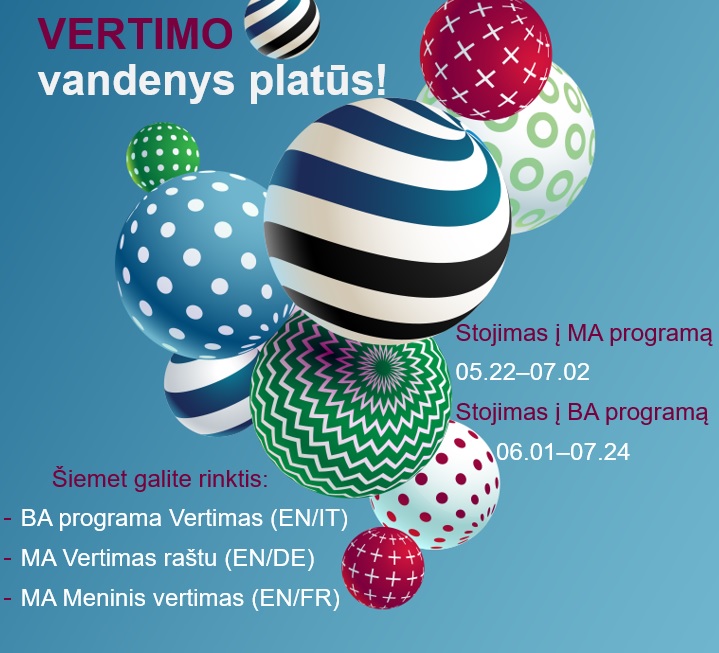
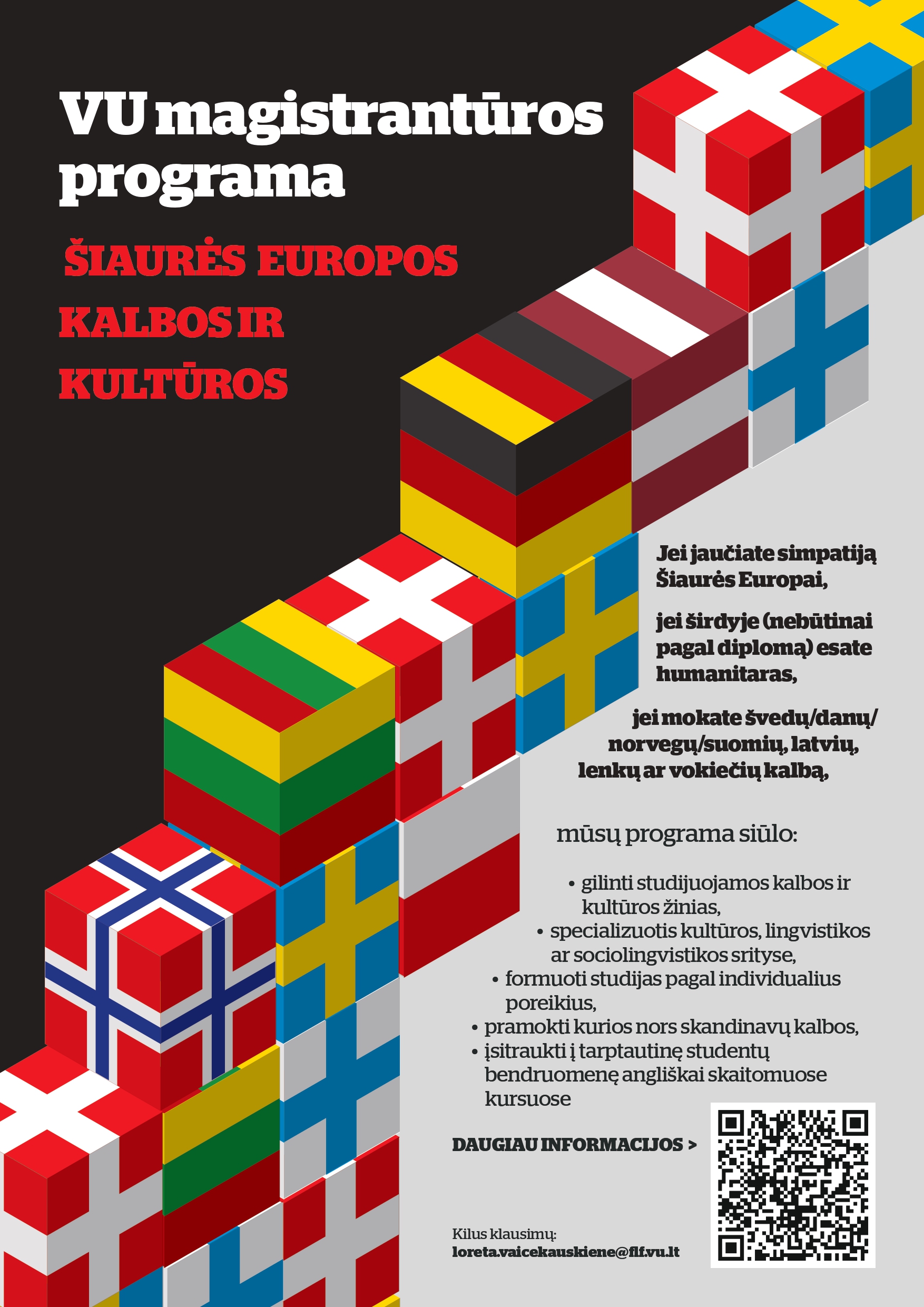
  • Nauja MA programa – Šiaurės ir Baltijos jūros regiono kalbos ir kultūros! Kviečiame studijuoti!

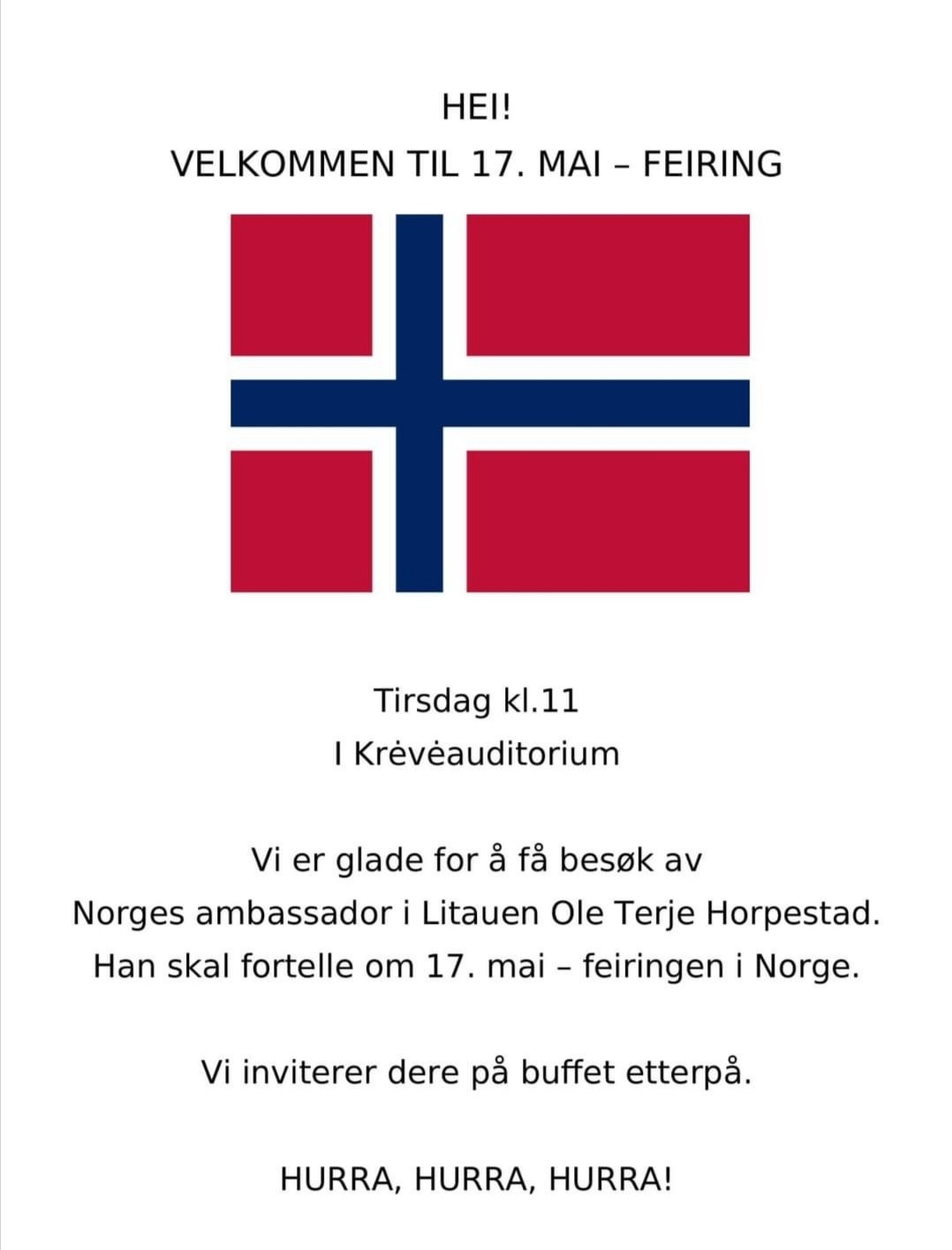
  • 🇳🇴 Kviečiame švęsti Gegužės 17-ąją! 10:30, Daukanto kieme.

  • 🇫🇮 A high-level delegation from the Finnish Parliament, led by its Speaker, Dr. Jussi Halla-aho and consisting of members from three major political parties, visited the Centre for Scandinavian Studies on Monday. The delegation was welcomed by our staff and students, after which a lively discussion and sharing of experiences followed. All in Finnish, of course! The delegation emphasized the importance of versatile language skills as well as the long cultural and linguistic bonds between Lithuania and Finland. Thank you for taking the time to visit us! Photos here!

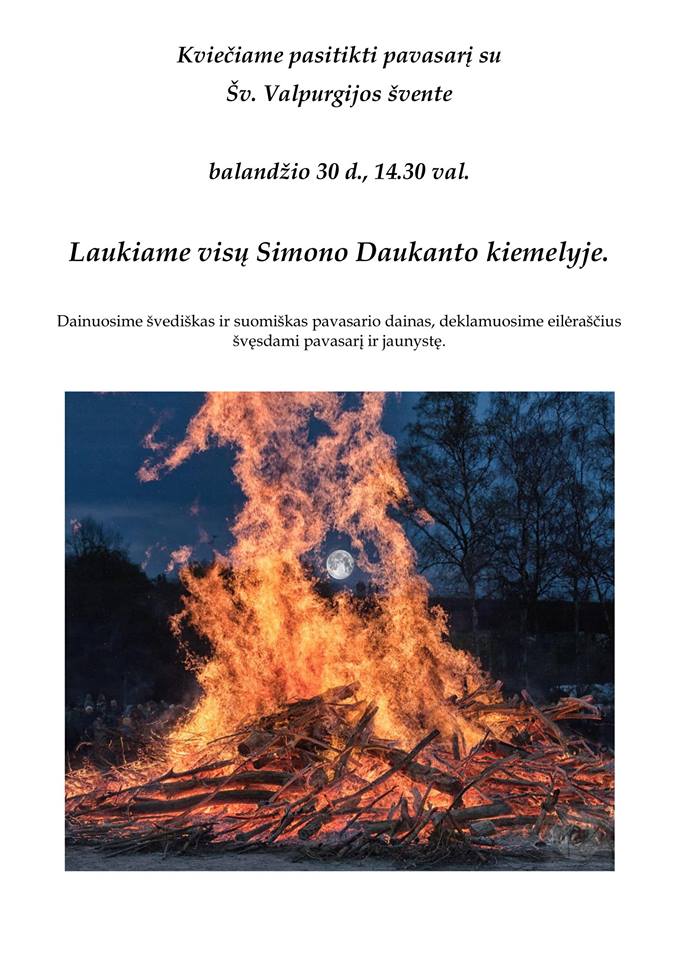
  • Kviečiame pasitikti pavasarį su Šv. Valpurgijos švente! Balandžio 30 d. 14.30 laukiame visų Simono Daukanto kiemelyje.
    Dainuosim švediškas pavasario dainas, švęsdami pavasarį ir jaunystę.

  • Balandžio 26 d., penktadienį, Skandinavistikos centras kviečia į kasmetinę BA programos studentų mokslinę konferenciją. Konferencija prasidės 9:30 ir vyks 92 auditorijoje.

  • Pirmadienį, balandžio 22 d. 13:00 val. (314A aud.) kviečiame į svečio iš Europos Parlamento Algirdo Venckaus seminarą apie Europos Sąjungos institucijas, jų sandarą, ES susikūrimo istoriją, o svarbiausia - vertimus ir vertėjų darbą. Kviečiame dalyvauti, aktyviai užduoti klausimus, domėtis ES siūlomomis stažuočių galimybėmis.

    Algirdas Venckus yra VU alumnas, baigęs prancūzų kalbos BA studijas ir vertimo MA studijas.

  • Conference Mytologi og Folklore i Skandinavisk Litteratur will take place in our centre on 25 April. Please find the programme here.

  • The Danish Ambassador Mme Grete Sillasen will be visiting the Faculty of Philology and the Centre for Scandinavian Studies on Friday, April 19th. The event will take place in Aula Parva (Universiteto g. 3) from 10:45 til 12:00.

  • Kviečiame regsitruotis į gretutines skandinavistikos studijas! Registracijų laukiame iki balandžio 30 dienos. Motyvacinis pokalbis preliminariai planuojamas gegužės 3 dieną.

  • Finnish art historian, MA Leena Ahtola-Moorhouse is giving an open lecture on the fascinating painter Helene Schjerfbeck on Friday, March 8th at 15:00 in the Scandinavian Centre (314AB). You are most welcome to join the event! You can read more about it here.

  • Författare Kristina Ohlsson, känd för sina spänningsromaner för barn och kriminalromaner för vuxna, med statsvetares bakgrund och spännande yrkeserfarenheter som politisk- och säkerhetsanalytiker i Sverige och EU, författare på heltid sedan 2012 och gäst på årets Vilnius bokmässa kommer på besök till vårt center Fredag 23 februari, kl. 11.00 (rum 314 AB).

    Kom och träffa författaren med en svindlande yrkesbana. Ställ frågor om hur man hittar sin väg i yrkeslivet, förverkligar sina drömmar samt om det aktuella i Sveriges och världens nutid. På svenska (men! med möjlighet att ställa frågor på skandinaviska, engelska & även litauiska.)

  • On 20-21 February, dr. Svetla Tzviatkova Kovatcheva will hold three lectures in Norwegian:
     - 20th February, 9.00: "Jeg trives best med to og et halvt: om hunkjønn i norsk (bokmål)" (Room 402)
     - 20th February, 13.00: "Om særskriving, sammenskriving, subjesregelen, engelsk påvirkning og andre språklige utfordringer i norsk" (Room 402)
     - 21st February, 11.00: "Det norske oljeeventyret" (SP1, UKI)

  • In Memoriam prof. Per Thomas Andersen

  • Dr. Johanna Laakso, professor of Finno-Ugric studies at the University of Vienna will be visiting our Centre on 27 February-1 March. She will deliver 3 lectures in English:
    - 27 February, 13:00 (Tuesday): on the history of Finnougristics (in English, room 122).
    - 28 February, 13:00 (Wednesday): on Finnish and Swedish language contacts (in English, room 122).
    - 1 March, 13:00 (Friday): a public lecture "Demistifying the Finno-Ugric languages" (in English, room 314A-B). More information about this lecture can be found here.

  • Professor Björn Meidal, the prominent researcher of August Strindberg life and work will be visiting Center of Scandinavian studies on 12-13th February. The visit is organized with the support of the Swedish Ambassy in Vilnius. Prof. Björn Meidal will deliver two lectures:

    12 February, Monday 11.00. August Strindberg och Carl Larsson: Hjärtevänner och dödsfiender. On the relationship between two key figures in Swedish culture of the late 19th and early 20th century (room 314 AB, in Swedish).

    13 February, Tuesday 11.00. Strindberg and 20th Century Avant-garde Drama and Theatre. The focus is on August Strindberg´s importance in and for 20th Century drama and theatre (playwrights and directors), with some bearings also on prose, poetry and film (room 92, in English).

    More about prof. Meidal: here and here. More about the lectures: here.

2023

  • On December 5-7 prof. Mathew J. Driscol will hold several lectures on old Icelandic literature in our centre. You can find the abstracts of the lectures and their precise times and locations here.

  • Our wonderful alumnus Adelė Šalkauskaitė will give a talk on Perfomativity Studies in the Context of Philology. The event will take place on November 29, at 17:00, in  Room 314. You can find more information in this poster.

  • On December 8, at 15:00, in Room 314 prof. Helena Wahlström Henriksson (Uppsala University) will give a talk Single Fathers Fail: Swedish cinema and (non)stigmatization of single parents (the visit is part of Mothernet project). You can find the abstract here.

  • On December 7th, at 15:00 in Vinco Krėvės room prof. Matthew J. Driscoll (Copenhagen University) will give a talk "Every book in every language on every subject": Hernando Colón’s universal library and the Libro de los epitomes. You can find the abstract here.

  • 🇫🇮 We will be celebrating Finnish Independence Day on December 5th, at 14:00 in Room 314. 🇫🇮

  • On December 5th, at 13:00, in Room 314 dr. Maria Ahlholm (Helsinki University) will give a talk Translanguaging in the school: implications for conception of language and language pedagogy.

  • On November 24th, at 15:00, in Room 402 dr. Giedrius Tamaševičius will give a talk on the Danish film classic Olsen-banden. Please find the abstract here.

  • Come and meet the Danish TV journalist and author Ole Retsbo who will tell about his past and current projects. The talk will take place on 9th of November, at 11 o'clock, in Room 314. The event will be held in Danish.

  • On Thursday the 9th of November, at 9 o'clock, the successful Swedish author Jens Lapidus will be visiting us at Vilnius University. He will talk about his novel Paradis city (2021), which is being developed into a TV series and is now being filmed in Vilnius! More information about the event (in Swedish) is here (PDF file).

  • We will have two guests next week! Litterary critic and culture journalist Ingrid Ellam will give a talk at our centre on 18th September, at 11:00, in room 314. More information about the event can be found here. And on 19th September, at 13:00, also in room 314 the economist and book author Kenneth Hermele will talk about the Jewish resistance during the Holocaust. You can find more information here.

  • Our bachelor's students will be defending their theses on 13-14th June 🎓 You can find the programme here.

  • Our master's students will be defending their theses on 8th June. Please find the programme here.

  • On May 31 – June 1, Centre for Scandinavian Studies will be hosting international research network New Geographies of Scandinavian Studies. In this connection, two open lectures will be held in English:

    Wednesday, May 31, 11 30-13 00, Room 314. Prof. Violeta Davoliūtė (TSPMI). The Transnational and Transgenerational Migration of Memory.

    Thursday, June 1, 13-14, Room 314. Dr. Satu Grünthal (Skandinavistikos centras). Vyborg – a lost border city of histories, memories and meanings

    You are welcome to join!

  • Författaren Sara Mannheimer På besök hos oss på Centrum för nordiska studier, 18 Maj torsdag kl. 11.00, rum 314.

  • Welcome to a discussion with Emil Slott about his project “Humor and Hate: How extremist groups use online humor as a manipulation tool for radicalization?”. Friday, 5th of May, 3 p.m. Room 402.

  • From the Classroom to the Crypt: our students' tour in the dungeons of Vilnius Cathedral. Our dear professor Rūta boldly lead her students of Old English to the historic depths beneath the city.

  • Come celebrate Walpurgis Night with us on 28th April, 15:10, in Daukantas yard (the one with the oak and entrance to Domus Filologae)! We will sing Swedish songs and celebrate spring 🌼

  • Our students' conference will take place on 28th April, at 9:00, in V. Krėvės auditorium (literature section) and Room 314 (linguistics section). Please find the programme here.

  • Skandinavistikos centre savo eiles skaitys norvegų poetas Erling Kittelsen.
    The Norwegian poet Eling Kittelsen will read his works at our centre on 21st April.

  • Dr. Sirkku Latomaa's lecture The Past And Present of Linguistic Diversity in Finland was very interesting and fun. Dr. Latomaa has kindly agreed to share her slides, you can find them here.

  • Welcome to the lecture The Past And Present of Linguistic Diversity in Finland, by dr. Sirkku Latomaa, University of Tampere. It will take place at Room 314 on 28th February.

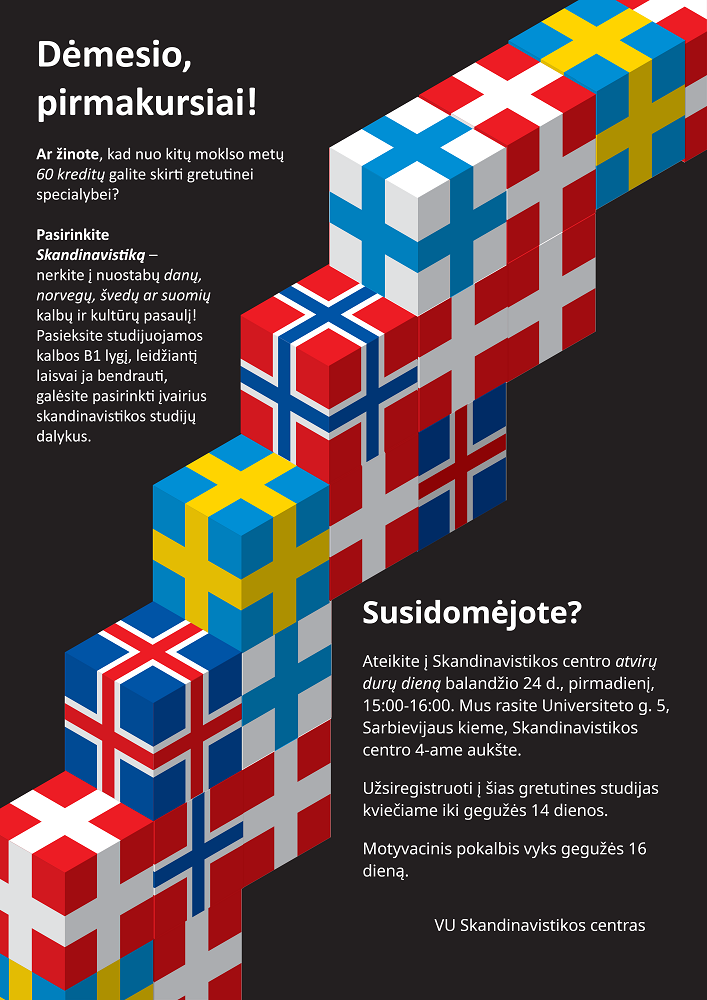
  • Mieli pirmakursiai! Kviečiame registruotis į gretutines Skandinavistikos studijas nuo kovo 1 dienos! Prieš apsispręsdami galite ateiti į atvirų durų dieną Skandinavistikos centro 4-ame aukšte, balandžio 24 d., 15:00.
    Registruotis galima iki gegužės 14 dienos, motyvaciniai pokalbiai planuojami gegužės 16 dieną.

  • Welcome to the seminar on neurolinguistics, held at our centre by The Lund Neurolinguistics group on March 31st. Please find the program and the abstracts here (the program last updated on March 24th).


2022


2021

2020

  • Skandinavistikos centro bakalauro darbų gynimai vyks birželio 18-19 d. platformoje Microsoft Temas. Programa lietuvių kalba (su prisijungimo linkais).  // Försvaren av kandidatuppsatser 2020.06.18-19. Program på svenska (med MS Teams-kopplingar)
  • Skandinavistikos centro 4. kurso studentų konferencija 2020-05-14/15 / Kandidatkonferens 14-15 maj 2020.
    Konferencijos programa (su nuorodomis į MicrosoftTeams grupes) / Konferensprogram
  • Mieli pirmakursiai, dėl karantino nukeliama gretutinių studijų priėmimo motyvacinių pokalbių data. Jie vyks balandžio 30 dieną per Microsoft Teams. Apie jūsų individualaus pokalbio laiką informuosime el. paštu pasibaigus registracijai, nuo balandžio 22 dienos
  • Registracija į skandinavistikos gretutines studijas vyksta iki balandžio 22 d. Daugiau informacijos čia.
  • Lecture by dr. Susanna Virtanen from Helsinki university. Uralic studies: current state of research and education, Friday, 6 March, at 13:00 (115A)
  • Kviečiame iki 2020 m. kovo 8 d. teikti paraiškas įmonės „COGNIZANT TECHNOLOGY SOLUTIONS LITHUANIA“ VARDINEI STIPENDIJAI gauti. Atsisiųskite kvietimą ir motyvacinio laiško formą

2019

***

 ***

Anastasija Belovodskaja

BASIC INFORMATION

2020 07 25

Associate professor

Address: Universiteto 5, LT-01513 Vilnius

Phone: +370 5 268 7224  

Email: 

Office hours: contact by email


Research interests:

  • Media Linguistics
  • Cognitive Linguistics
  • Semantics and Pragmatics
  • Foreign Language Teaching Methodologies

Courses taught:

  • Media Linguistics (1 and 3 semesters, MA)
  • Semantics and Pragmatics (MA)
  • Cognitive Linguistics (MA)
  • Introduction to Linguistics (seminar, BA)
  • Modern Russian: grammar, stylistics (BA)
  • Lexicology and Lexicography (BA)
  • Didactics and methodology of teaching Russian language (BA)
  • Russian as Foreign Language (Erasmus)

PUBLICATIONS

Vilnius University Publications Database

Google Scholar profile: 

https://scholar.google.com/citations?user=pHL6XIkAAAAJ&hl=ru


Main Publications (2019-2024)

Belovodskaja, A. Kępa-Figura D., Szkudlarek-Śmiechowicz E. (2024) Clickbaitism and Trust in Media Outlets In: Trust, Media and the Economy Mutual Relations (edited by Joanna Paliszkiewicz, Jerzy Gołuchowski, Katarzyna Zdanowicz-Cyganiak, Kuanchin Chen), p. 42-59 Routledge.

Belovodskaja, A. (2023). Selfie discourse and social network communication in the age of artificial intelligence (RU: Селфи-дискурс и сетевая коммуникация в эпоху искусственного интеллекта). In: Przegląd Rusycystyczny 3 (183), p. 110-124  DOI 10.31261/pr.15357

Belovodskaja, A. (2023). Meme as a weapon of mental wars (RU: Мем как оружие ментальных войн). In: Język – Polityka – Ideologia. Tom 1, p. 10-27. Wydawnictwo Uniwersytetu Gdańskiego. Red. Żanna Sładkiewicz Marta Noińska

Belovodskaja, A. (2021). Speech Etiquette of Russian-Speaking Online Communities in Lithuania. Book chapter. In: Duskaeva L. (eds) Speech Etiquette in Slavic Online Communities. Palgrave Macmillan, Cham. p.177-202 https://doi.org/10.1007/978-3-030-81747-3_8

Belovodskaja, A., Hornáček Banášová M., Katinas D., Lipavic Oštir A., Lipovec A., Volungevičienė S. (2021). Mathematics for life. Soft-CLIL Module for RFL (Математика для жизни. Модуль Soft-CLIL по РКИ): Textbook, 141 p., Teacher‘s book, 89 p., CD). University of Ss. Cyril and Methodius in Trnava http://kger.ff.ucm.sk/de/softclil-projektergebnisse/ 

Belovodskaja, A., Korostenskienė J. (2021). Humour of Solidarity in Russian-Speaking Discourse on Social Networking Groups in Lithuania. Book chapter. In: The Ethics of Humour in Online Slavic Media Communication. Routledge. doi:10.4324/9781003139584-13. p. 139-153 

Belovodskaja, A., Korostenskienė J. (2020). Address terms among the Russian ethnic minority in Lithuania in offline and online communication: an emerging new identity. Studies of transition states and societies, vol. 12, no. 2, p. 38-61
http://publications.tlu.ee/index.php/stss/article/view/853/723

Belovodskaja, A. (2019). Об исследовательском потенциале изучения хэштега как медиадискурсивного феномена (On expanding the research opportunities of the hashtag as a media discourse phenomenon). Media linguistics, 6 (1), p. 60-74. DOI: 10.21638/spbu22.2019.105 

Belovodskaja, A. (2019). Власть симулякра в эпоху новых медиа: к вопросу об изучении информационных аномалий в цифровом медиапространстве (The power of simulacrum in the age of the power of new media: to the question of information disorder in the digital space). Perswazja językowa w różnych dyskursach (Language persuasion in various discourses), t. 3/ Red. Ż. Sładkiewicz, A. Klimkiewicz, M. Noińska. Tom III, Gdańsk: Wydawnictwo Uniwersytetu Gdańskiego, ISBN 9788378658016, p. 168-192.

PhD dissertation


  • Сетевая пародия как лингвокогнитивный феномен (в контексте современного анонимного сетевого творчества); EN: Network Parody as a Linguo-Cognitive Phenomenon (in the Context of Contemporary Anonymous Online Creativity). Vilnius University, 2012.

Projects (2019-2024)

  • Project “Optimising Language Teaching and Learning through Generative Artificial Intelligence (GAI)” (National Programme for the Professional Development of Educational Staff, excluding higher education personnel); Member of the programme development team (2024-2025); Lecturer in the programme (2025)  https://atviri.emokymai.vu.lt/course/view.php?id=499
  • Project „Pedagogų rengimo studijų programų dalykų turinio skaitmenizavimas" (VU). Project expert 2021.10.25 – 2022.08.31 https://atviri.emokymai.vu.lt/course/view.php?id=232 
  • Project „TestU Online - free portal of tests for education” (Erasmus+ KA2; Slovenská akademická asociácia pre medzinárodnú spoluprácu). Project researcher 2021 04 01 – 2023 03 31
  • Project „Tęsk” (Institute of Educational Sciences at Vilnius University; 09.2.1-ESFA-V-727-01-0001): Practice Leader 2020 10 30 – 2021 06 11
  • Project „Problemorientierter Soft CLIL Ansatz für nichtenglischen FS-Unterricht” (Erasmus+ KA2; http://kger.ff.ucm.sk/de/softclil-projektergebnisse/). Project researcher 2018 09 01 – 2021 08 31

Reviewer for scientific journals:

The European Journal of Humour Research

Studia Rossica Gedanensia

Acta Universitatis Lodziensis, Folia Linguistica (2024 – 2025)

Respectus Philologicus

Slavistica Vilnensis

Verbum


INFORMATION FOR STUDENTS

Courses taught

https://emokymai.vu.lt/?lang=en

https://atviri.emokymai.vu.lt/course/view.php?id=232

https://atviri.emokymai.vu.lt/course/view.php?id=499


Pavel Lavrinec

Vertimo bakalauras

Dar svarstai, ką studijuoti?

Vertimo studijos keičiasi – galbūt jos kaip tik tau!

ChatGPT Image Jul 26 2025 09 46 58 AM

Šiandien vertimas – tai ne tik kalbos. Tai technologijos, kultūra, kūryba ir galimybės dirbti globaliai.
VU vertimo bakalauro programa yra praktiška, lanksti ir orientuota į ateitį.

Kodėl verta rinktis VU vertimo studijas?

  • Programą sudaro 240 kreditų: 90 skirta Vertimui, 90 - įvairiems filologiniams dalykams, o 60 renkiesi pats: nuo psichologijos iki komunikacijos, teisės ar ekonomikos.
  • Šiuolaikinės vertimo technologijos ir realios praktikos užduotys.
  • Įgysi kompetencijų, reikalingų tarptautinėje erdvėje
  • Rinkdamasis vertimą gauni daugiau nei profesiją – gauni įrankius prisitaikyti bet kur.

Ką sako studentai?

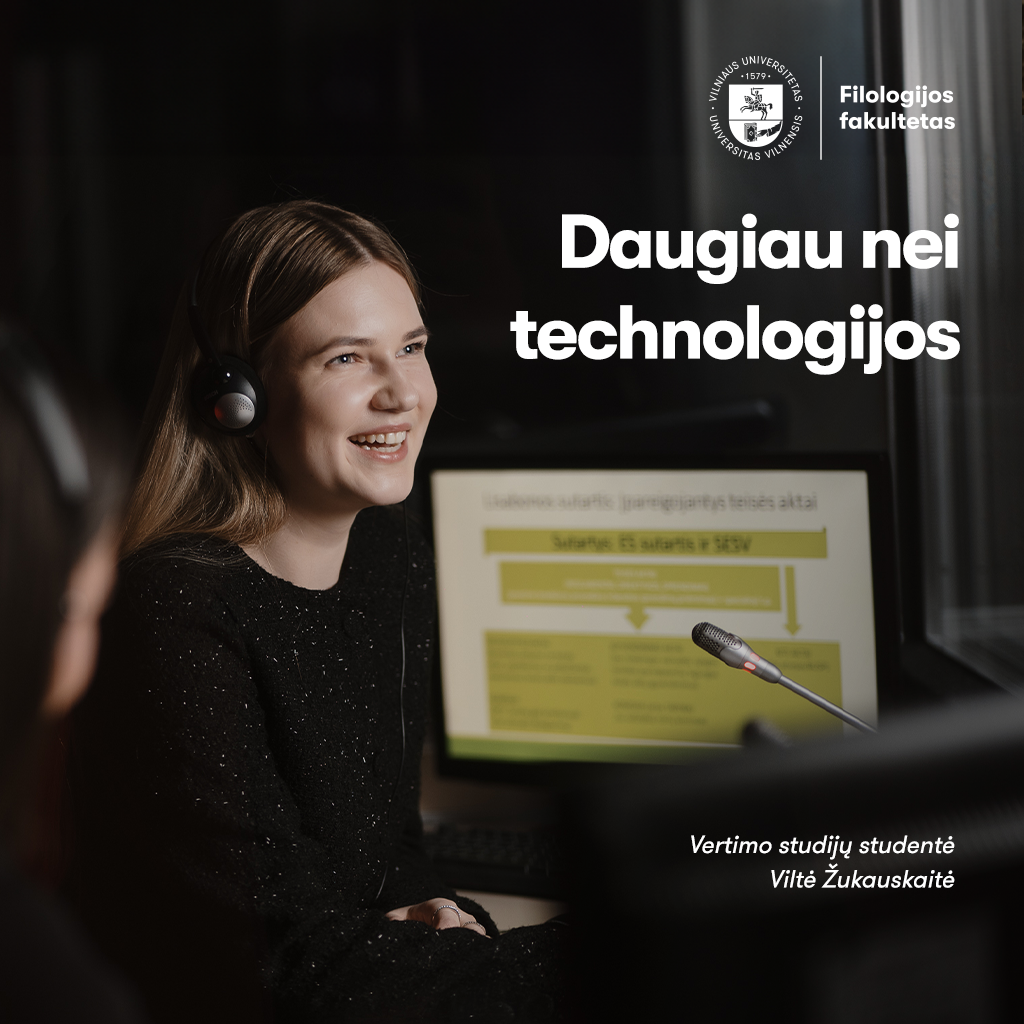
barbora

Būsima ketvirtakursė Barbora Sendžikaitė žino apie ką kalba, kai sako, kad vertėjui vien kalbos žinių nepakanka ir kai vardija dilemas, su kuriomis neišvengiamai susiduria šio amato profesionalai.
💬 Yra įvairių įsivaizdavimų apie vertimą kaip mokslą, aš irgi stodama girdėjau visokių komentarų: „ką ten mokytis, jei kalbą moki, tai imi ir verti“. Žinoma, tai netiesa. Realybėje ir vertimo teorija, ir praktika sudėtinga, įvairiapusiška ir įdomi, iškyla tikslumo, autentiškumo, prieinamumo, etikos ir dar visokie klausimai. Todėl siūlau vietoj spėliojimų ateiti pabandyti patiems.
💬 Dabar tam geras metas – truputėlį pavydžiu visiems dabar stosiantiems, nes vos ne atvimpa žandikaulis pažiūrėjus, koks ilgas pasirenkamųjų dalykų sąrašas. Dabar galima rinktis ir susikoncentruoti į tai, kas iš siūlomų kursų asmeniškai aktualiausia ir įdomiausia.
💬 Dar vienas studijų privalumas – sudaromos sąlygos išvažiuoti mainams į užsienį žinioms plėsti ir kalbai tobulinti. Grupėje ne vienas žmogus buvo išvykęs ir į Europos, ir tolimesnes šalis, o aš pati džiaugiuosi galimybe šį rudenį mokytis Taivane.

Svarbu žinoti:

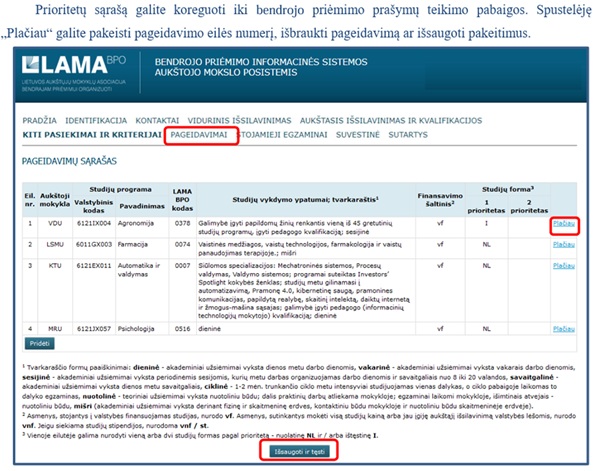
Paraiškos priimamos iki rugpjūčio 6 d., 11 val. per LAMA BPO sistemą.
Dar gali pakoreguoti savo prioritetų sąrašą ir įrašyti vertimą į pirmą vietą.

bpo

Daugiau informacijos apie mūsų programą ir galimus pasirinkimus:

- Vertimo programa (anglų kalba + vokiečių „nuo nulio“)
FLF Vertimo studijos

Call for papers

virsus konf

CALL FOR PAPERS

International Conference

TRANSLATION AT THE CROSSROADS OF IDEOLOGIES AND CULTURES

Department of Translation and Interpretation Studies, Faculty of Philology, Vilnius University

18–20 June 2026

The Department of Translation and Interpretation Studies at the Faculty of Philology of Vilnius University cordially invites you to the international conference Translation at the Crossroads of Ideologies and Cultures to discuss a multilevel role and complex positionality of translation and translators in changing historical, social, political, and communicational settings.

Throughout the course of history, translation has been seen as both, dangerous and necessary. Like two-faced Janus, it has been marking the very threshold between cultures, serving for opening up to and blocking the Other (Tatolytė 2024; Lefevere 1995 (1990); Wolf 2002). It has been used and manipulated for various ends, from going through genuine societal transformations to creating an illusion of multicultural communication (Bassnett, Lefevere 1998; Maskaliūnienė, Tatolytė 2024). This multifaceted role of translation comes into prominence in times of change and formation, with the call for balancing between novelty and preservation and the need of introducing, appeasing or estranging the encountered ideologies and cultures. Translation as bearing witness is instrumental in times of catastrophe, and is used as a tool of empowerment by the oppressed, and of subjugation by the dominant powers (Boase-Beier 2021; van Wyke 2010). Furthermore, Crises and precarious communicational circumstances highlight an ethically charged role and embodiment of a translator as mediator; carrying a certain level of responsibility for a successful resolution due to holding a competence of bridging participating parties (Cronin 2005; O'Brien, Federici 2022). Even in minor communicational day-to-day situations, the role of translation and translator’s positionality can shed light on larger underlying processes and underpin socio-political, ecological, and cultural stands. Therefore, a more detailed study into what part translation plays in history and in our daily encounters with the Other is invited.

How does translation as a global activity shape the values we communicate and what is the “specificity of its impacts in different locations over time” (Cronin 2017)? Does it help to break the stereotypes or does it enforce them? Is it paving the paths to understanding or does it facilitate ostracising? What is the role of translation in the formation of nations? How much does translation influence our policies and legal practises? What is its impact on our perception of the Other and the world at large? Is a translator always a willing participant of these processes? How is this role of translation and translator changing with the growing technology-driven shift in cultures and societies, if at all?

We invite papers from Translation Studies and Multidisciplinary research addressing, but not limited to, the following axes of discussion on the role of translation:

  • Translation in nation formations and cultural transformations (legal, literary and other modes of translation): Translation in literary polysystem and canon formation; Translation and legal practices and policies; Translation in diaspora; Micro historical perspective on translation;
  • Translation in day-to-day social settings: public discourse and performativity (periodicals, media, social media); Translation and (self)censorship; Translation ideology and postcolonial approaches;
  • Eco-translation, translation of the queer and feminist space—the shift from periphery to the centre of attention;
  • Cultural and other representation in Audiovisual translation;
  • Translation in cultural milieu: visual and stage arts, cinema, music, pop and sub culture;
  • Translation and Memory studies: translating memory and memory in translation;
  • Translation/interpreting in borderline situations (translation in crises and conflicts, translation of catastrophes);
  • Translation/interpretation for refugees, migrants, and ethnic minorities: Community interpreting and interpreting in situations of controlled communication; Education for mediation;
  • Translator’s embodiment, agency and actors’ network;
  • MA and AI translation: Biases, shortcomings, responsibilities and perception of translation.

Following the conference, we will invite submissions for the Special Issue of the journal Vertimo Studijos / Studies in Translation.

 REFERENCES

Bassnett, Susan, André Lefevere. 1998. Constructing Cultures. Essays on Literary Translation. Multilingual Matters.

Boase-Beier, Jean. 2021. Retelling Catastrophe through Translation. Narrative Retellings: Stylistic Approaches, ed. by Marina Lambrou. Bloomsbury Publishing, 129–142.

Cronin, Michael. 2005. Burning the House Down: Translation in a Global Setting. Language and Intercultural Communication 5(2), 108–119.

Cronin, Michael. 2017. Eco-translation: Translation and Ecology in the Age of Anthropocene. Routledge.

Maskaliūnienė, Nijolė, Ingrida Tatolytė (eds.). 2024. Translation And Censorship Under Soviet Ideology. Lithuania, 1940–1990. Summary, transl. by Daina Valentinavičienė. Vertimas ir cenzūra sovietinės ideologijos sąlygomis. Lietuva, 1940–1990, sud. Nijolė Maskaliūnienė, Ingrida Tatolytė. Vilnius University Press, 478–497.

Lefevere, André. 1995 (1990). Translation: Its Genealogy in the West. Translation, History and Culture, ed. by Susan Bassnett, André Lefevere. Cassell, 14–28.

O’Brien, Sharon, Federico M. Federici (eds.). 2022. Translating Crises. Bloomsbury Publishing.

Tatolytė, Ingrida. 2024. Dviveidis Janas: vertimas tarp atverties ir užkardymo. Vertimas ir cenzūra sovietinės ideologijos sąlygomis. Lietuva, 1940–1990, sud. Nijolė Maskaliūnienė, Ingrida Tatolytė. Vilnius University Press, 107–162.

van Wyke, Ben. 2010. Ethics and Translation. Handbook of Translation Studies Vol. 1, ed. by Yves Gambier, Luc van Doorslaer. John Benjamins, 111–115.

Wolf, Michaela. 2002. Censorship as Cultural Blockage: Banned Literature in the Late Habsburg Monarchy. TTR 15 (2), 45–61.


KEYNOTE SPEAKERS

Queering the Cold War Canon, or Translation and the Making of a Queer World Literature

Prof. dr. Brian James Baer, Kent State University (USA)

Translation, Minority and AI

Prof. dr. Michael Cronin, Trinity College Dublin, the University of Dublin (Ireland)

Crisis of Trust: Reaching Translation Consensus When Communicating Health Risks

Prof. dr. Federico M. Federici, University College London (United Kingdom)

Ideological Shifts and the Politics of Retranslation in Ukraine

Assoc. prof. / Researcher dr. Oleksandr Kalnychenko, V.N. Karazin Kharkiv National University / Matej Bel University in Banská Bystrica (Ukraine / Slovakia)

Public Service Interpreting and Technology: Challenges, Opportunities, and Controverses

Prof. dr. Raquel Lázaro Gutiérrez, FITISPos-UAH Group, University of Alcalá (Spain)

SPECIAL SESSION & DISCUSSION

Beyond Trust and Necessity: Translation and Interpreting Technologies in Conflict and Crisis Situations

Convener: Dr. Khetam Al Sharou, Dublin City University (Ireland)


ABSTRACT SUBMISSION

Conference languages are English and Lithuanian. Simultaneous interpreting to English and Lithuanian will be provided for keynote speakers’ presentations. The conference will be held on-site.

We invite paper contributions of 30 min in total, 20 min for presenting and 10 min for discussion.

Please submit abstracts of no more than 250 words and biographical notes of no more than 150 words  in English or Lithuanian by 16 February 2026 using the online abstract submission form: <Abstract Submission>   

Notification of acceptance will be given by 16 March 2026.

'Early Bird' notification of acceptance will be given by 7 November 2025.

Please note there will be a fee of 150 EUR (PhD students` concession 80 EUR) for those who present a paper, and 80 EUR (students’ concession 40 EUR) for those who wish to attend without presenting a paper.

Should you have any questions related to this call, please feel free to contact dr. Dalia Mankauskienė on behalf of our organizing committee: <>;.

For more information, please visit our conference website.

Translation at the Crossroads of Ideologies and Cultures

https://www.flf.vu.lt/en/vsk

Our new book!

vertimas ir cenzura virselis internetui 900x900

We are excited to introduce a new publication—a result of a four-year project contributed to by colleagues from the Department of Translation and Interpreting Studies. This comprehensive book, Translation and Censorship in the Context of Soviet Ideology: Lithuania, 1940–1990, delves into the intersection of translation and ideological control during the Soviet era.

As stated in the introduction, this book is not only for researchers and translation specialists. The authors hope it will also interest anyone who cares about the literature and authors whose translated works reached us during Soviet times— and those that did not. It explores how selections were made, how and why certain works were presented to readers, and what additional (educational or explanatory) functions these publications served. Moreover, it reveals insights that cannot be gathered solely from books themselves — such as how censorship functions were delegated and how omissions were made within texts.

The book presents a wealth of intriguing data and statistical analysis, shedding light on the dynamics of fiction publishing over 50 years while challenging certain long-held assumptions. Readers will also find captivating, almost detective-like stories of translation, censorship, and book publishing. These accounts illustrate not only how Soviet censorship influenced the texts that reached us but also how it shaped works that remain outside our cultural sphere.

Together with the book’s editors and authors, we hope this publication will help bridge gaps in translation criticism, offer a fresh perspective on the Soviet era, and encourage those interested in translation, censorship, and ideology to reflect on these concepts—their motivations, applications, and our own relationship with them.

The book was edited by Nijole Maskaliuniene and Ingrida Tatolyte.
Authors of the book: Lucija Cerniuviene, Nijole Keršytė, Dalia Mankauskiene, Nijolė Maskaliuniene, Paulius V. Subacius, Ingrida Tatolyte, Daina Valentinaviciene, Deimante Velichkiene and Agne Zolubiene.
The book was published by Vilnius University Publishing House, 2024
The book and project were sponsored by .

Vertimo Studijos on Ideology in Translation

Vert_studijos_16.jpg

Last week we published a new, fresh, sixteenth special issue of the journal Translation Studies, continuing the debate on the interplay between translation, ideology and ethics, which was launched at last year's conference Translation, Ideology, Ethics: Response and Credibility, and which is highly topical in today's geopolitical context.


This issue is edited by Prof. Nijolė Maskaliūnienė and Ingrida Tatolytė.


The authors of the articles delve into how ideologies affect the field of translation (Seyhan Bozkurt Jobanputra and Mehmet Zeki Giritli, Nataliia Rudnytska, Paulius V. Subačius, Karolina Butkuviene and Lolita Petrulionė); how translation influences our attitudes and values, and how it shapes the way we perceive ourselves and others (Ayman S. Elbarbary, Sabrina Solange Ferrero); how translation studies are enriched by multidisciplinary, interdisciplinary and transdisciplinary approaches (Anna Sverediuk, Mathilde Kamal-Girard); how we understand the history of translation and how it influences our collective and individual memory (Antony Hoyte-West, Karin Sibul, Gaëtan Regniers, Andrejs Veisbergs, Gunta Ločmele); what skills translators and interpreters should acquire in order to be able to work in situations where they are expected to play a more active role as communication facilitators, rather than just passively 'transmitting' a message, and how they should be trained for this role (Carmen Torrella Gutiérrez and Francisco J. Vigier-Moreno).

We hope you will also be interested in two conversations with renowned translation studies scholars, Professors Jorge Díaz-Cintas (University College London) and Outi Paloposki (University of Turku), who discuss the changing field of translation studies, the growing emphasis on the power and impact of translation, the contexts in which translation takes place, and the responsibility and self-reflection of translators. Although these scholars address seemingly disparate sub-fields of translation studies - audiovisual translation, which is forward-looking and technology-oriented, and the history of translation, which looks to the past and the archives - the issues they raise are very similar. Both also stress the need for closer collaboration between practitioners and theorists.

We invite you to read this special issue online and join the debate.

Follow us on Facebook ir and Twitter.