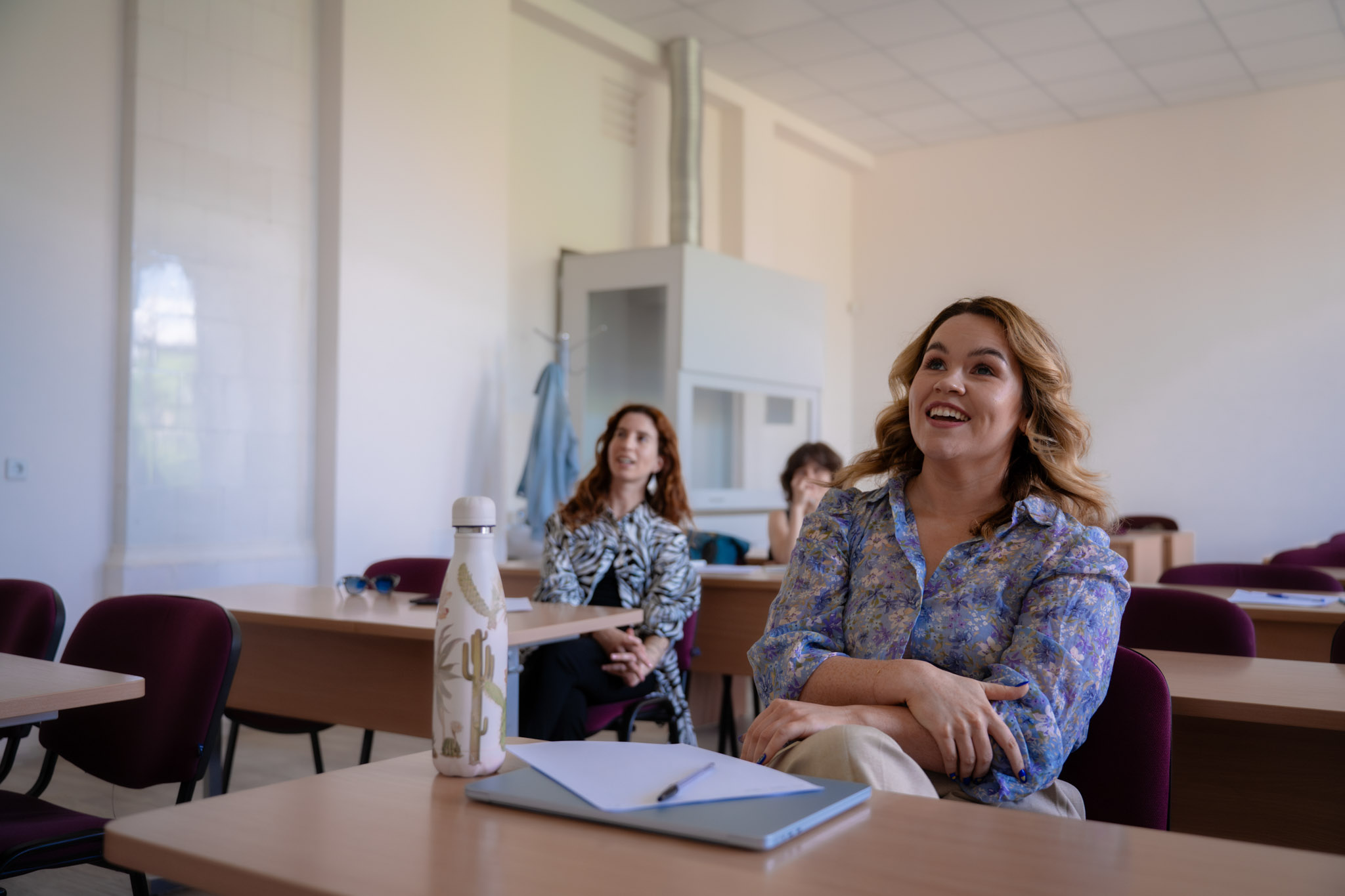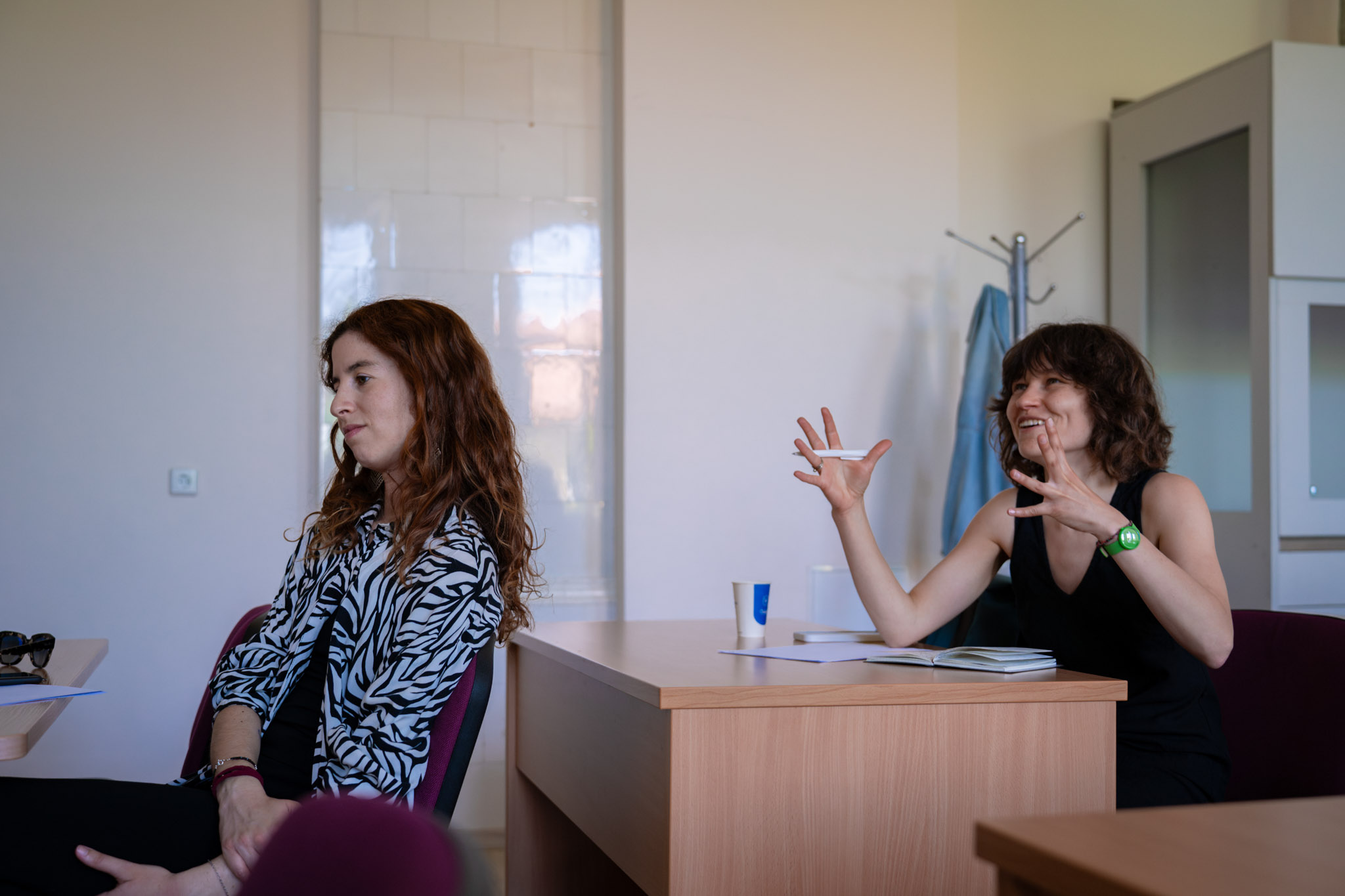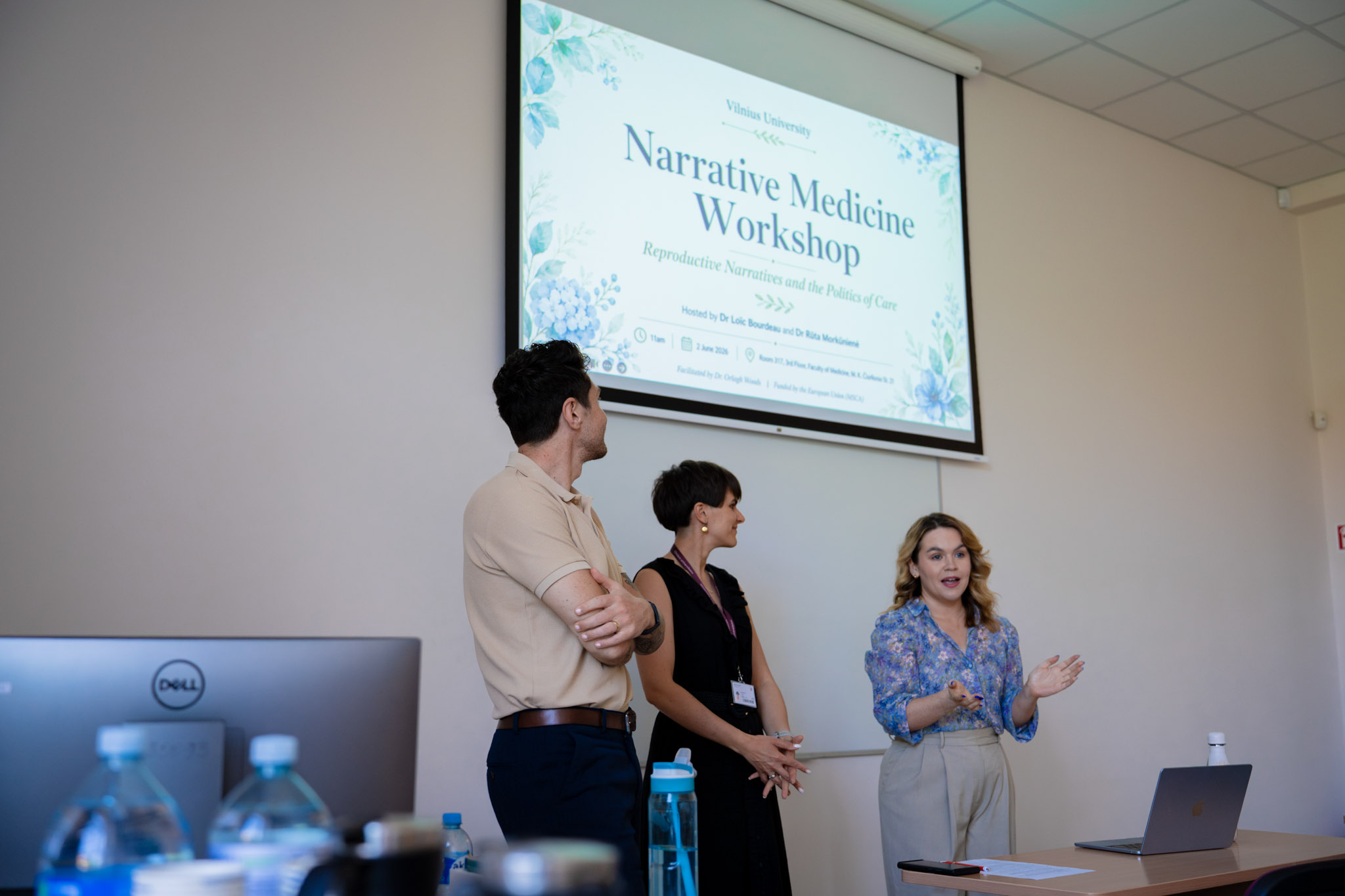
As part of the MSCA-funded postdoctoral project Repro-fiction, Dr. Orlagh Woods facilitated a workshop on Narrative Medicine on June 2nd, bringing together scholars and students from the Faculties of Medicine and Philology to explore reproductive healthcare through literature, art, and reflective discussion.
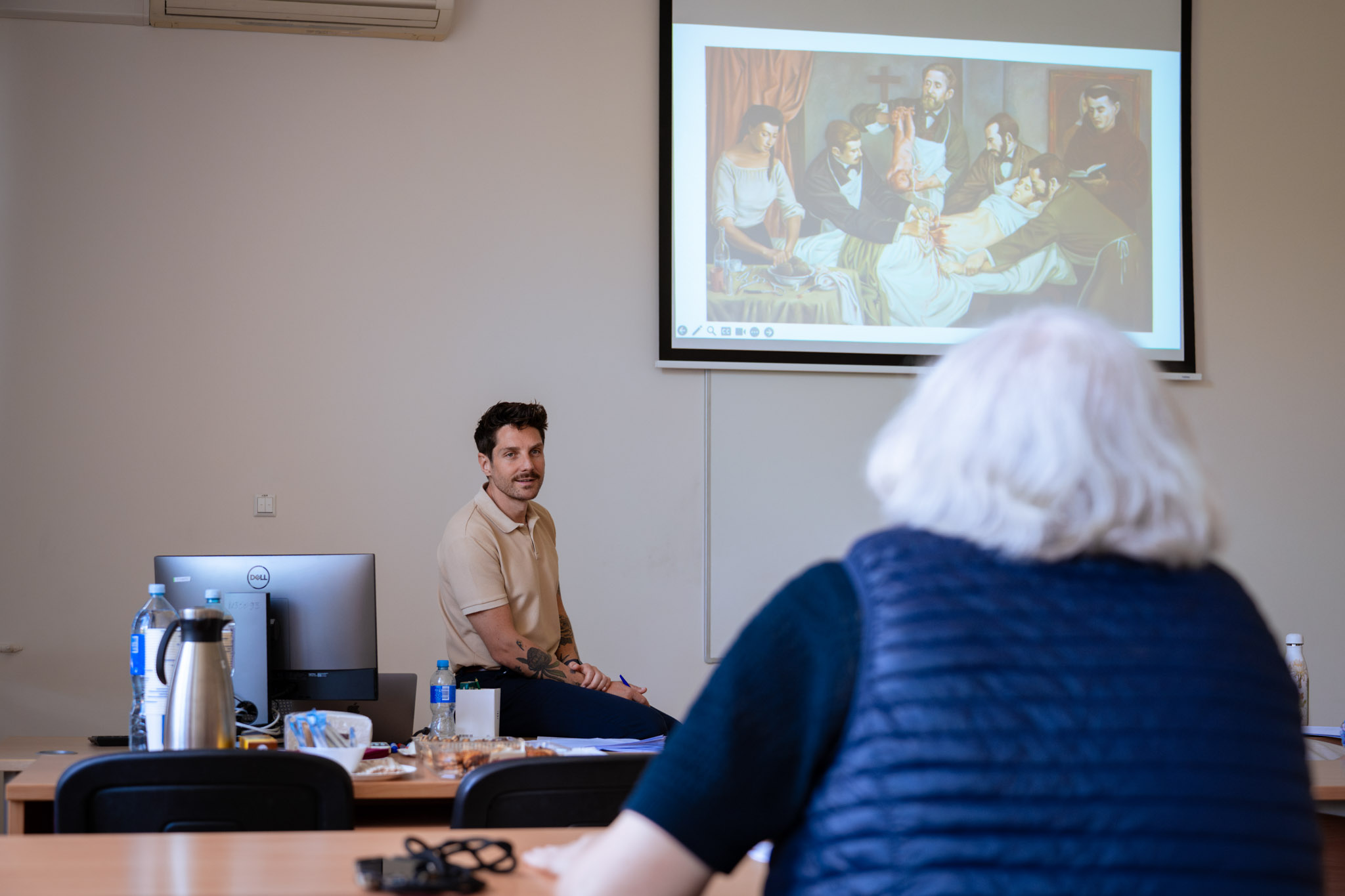
The workshop invited participants to engage with questions of healthcare and bodily autonomy through a series of guided activities. It began with a group reflection on a historical painting depicting the first Caesarean section performed in Latin America, encouraging participants to consider the ethical dimensions of reproductive care. This was followed by a close reading exercise centred on a literary text addressing reproductive loss, which prompted discussion about the role of storytelling in communicating experiences that are often silencedor difficult to articulate.
The workshop was co-hosted by Dr. Loïc Bourdeau and Dr. Rūta Morkūnienė, whose expertise in literary studies and medicine respectively highlighted the value of interdisciplinary approaches to complex healthcare issues. Drawing on perspectives from both the humanities and medicine, the session demonstrated how collaborative dialogue can deepen our understanding of reproductive experiences and improve approaches to care.
Narrative medicine is an evidence-based approach that emphasises the importance of listening to, interpreting, and responding to patients’ stories. Combining scientific knowledge with close attention to human experience, it is both an art and a science. Narrative medicine has been shown to foster empathy, strengthen communication, and support more patient-centred care. Its insights are particularly valuable in contexts where reproductive healthcare has historically been shaped by restrictive or repressive political and social regimes, creatingspace for voices and experiences that have often been marginalised.
The workshop formed part of the broader aims of Repro-fiction to explore the relationship between literature, healthcare and reproductive justice. It also opened up exciting possibilities for future interdisciplinary collaborations, and organisers look forward to building on these conversations through further events and partnerships.