CALL FOR PAPERS
International Conference
TRANSLATION AT THE CROSSROADS OF IDEOLOGIES AND CULTURES
Department of Translation and Interpretation Studies, Faculty of Philology, Vilnius University
18–20 June 2026
The Department of Translation and Interpretation Studies at the Faculty of Philology of Vilnius University cordially invites you to the international conference Translation at the Crossroads of Ideologies and Cultures to discuss a multilevel role and complex positionality of translation and translators in changing historical, social, political, and communicational settings.
Throughout the course of history, translation has been seen as both, dangerous and necessary. Like two-faced Janus, it has been marking the very threshold between cultures, serving for opening up to and blocking the Other (Tatolytė 2024; Lefevere 1995 (1990); Wolf 2002). It has been used and manipulated for various ends, from going through genuine societal transformations to creating an illusion of multicultural communication (Bassnett, Lefevere 1998; Maskaliūnienė, Tatolytė 2024). This multifaceted role of translation comes into prominence in times of change and formation, with the call for balancing between novelty and preservation and the need of introducing, appeasing or estranging the encountered ideologies and cultures. Translation as bearing witness is instrumental in times of catastrophe, and is used as a tool of empowerment by the oppressed, and of subjugation by the dominant powers (Boase-Beier 2021; van Wyke 2010). Furthermore, Crises and precarious communicational circumstances highlight an ethically charged role and embodiment of a translator as mediator; carrying a certain level of responsibility for a successful resolution due to holding a competence of bridging participating parties (Cronin 2005; O'Brien, Federici 2022). Even in minor communicational day-to-day situations, the role of translation and translator’s positionality can shed light on larger underlying processes and underpin socio-political, ecological, and cultural stands. Therefore, a more detailed study into what part translation plays in history and in our daily encounters with the Other is invited.
How does translation as a global activity shape the values we communicate and what is the “specificity of its impacts in different locations over time” (Cronin 2017)? Does it help to break the stereotypes or does it enforce them? Is it paving the paths to understanding or does it facilitate ostracising? What is the role of translation in the formation of nations? How much does translation influence our policies and legal practises? What is its impact on our perception of the Other and the world at large? Is a translator always a willing participant of these processes? How is this role of translation and translator changing with the growing technology-driven shift in cultures and societies, if at all?
We invite papers from Translation Studies and Multidisciplinary research addressing, but not limited to, the following axes of discussion on the role of translation:
- Translation in nation formations and cultural transformations (legal, literary and other modes of translation): Translation in literary polysystem and canon formation; Translation and legal practices and policies; Translation in diaspora; Micro historical perspective on translation;
- Translation in day-to-day social settings: public discourse and performativity (periodicals, media, social media); Translation and (self)censorship; Translation ideology and postcolonial approaches;
- Eco-translation, translation of the queer and feminist space—the shift from periphery to the centre of attention;
- Cultural and other representation in Audiovisual translation;
- Translation in cultural milieu: visual and stage arts, cinema, music, pop and sub culture;
- Translation and Memory studies: translating memory and memory in translation;
- Translation/interpreting in borderline situations (translation in crises and conflicts, translation of catastrophes);
- Translation/interpretation for refugees, migrants, and ethnic minorities: Community interpreting and interpreting in situations of controlled communication; Education for mediation;
- Translator’s embodiment, agency and actors’ network;
- MA and AI translation: Biases, shortcomings, responsibilities and perception of translation.
Following the conference, we will invite submissions for the Special Issue of the journal Vertimo Studijos / Studies in Translation.
REFERENCES
Bassnett, Susan, André Lefevere. 1998. Constructing Cultures. Essays on Literary Translation. Multilingual Matters.
Boase-Beier, Jean. 2021. Retelling Catastrophe through Translation. Narrative Retellings: Stylistic Approaches, ed. by Marina Lambrou. Bloomsbury Publishing, 129–142.
Cronin, Michael. 2005. Burning the House Down: Translation in a Global Setting. Language and Intercultural Communication 5(2), 108–119.
Cronin, Michael. 2017. Eco-translation: Translation and Ecology in the Age of Anthropocene. Routledge.
Maskaliūnienė, Nijolė, Ingrida Tatolytė (eds.). 2024. Translation And Censorship Under Soviet Ideology. Lithuania, 1940–1990. Summary, transl. by Daina Valentinavičienė. Vertimas ir cenzūra sovietinės ideologijos sąlygomis. Lietuva, 1940–1990, sud. Nijolė Maskaliūnienė, Ingrida Tatolytė. Vilnius University Press, 478–497.
Lefevere, André. 1995 (1990). Translation: Its Genealogy in the West. Translation, History and Culture, ed. by Susan Bassnett, André Lefevere. Cassell, 14–28.
O’Brien, Sharon, Federico M. Federici (eds.). 2022. Translating Crises. Bloomsbury Publishing.
Tatolytė, Ingrida. 2024. Dviveidis Janas: vertimas tarp atverties ir užkardymo. Vertimas ir cenzūra sovietinės ideologijos sąlygomis. Lietuva, 1940–1990, sud. Nijolė Maskaliūnienė, Ingrida Tatolytė. Vilnius University Press, 107–162.
van Wyke, Ben. 2010. Ethics and Translation. Handbook of Translation Studies Vol. 1, ed. by Yves Gambier, Luc van Doorslaer. John Benjamins, 111–115.
Wolf, Michaela. 2002. Censorship as Cultural Blockage: Banned Literature in the Late Habsburg Monarchy. TTR 15 (2), 45–61.
KEYNOTE SPEAKERS
Queering the Cold War Canon, or Translation and the Making of a Queer World Literature
Prof. dr. Brian James Baer, Kent State University (USA)
Translation, Minority and AI
Prof. dr. Michael Cronin, Trinity College Dublin, the University of Dublin (Ireland)
Crisis of Trust: Reaching Translation Consensus When Communicating Health Risks
Prof. dr. Federico M. Federici, University College London (United Kingdom)
Ideological Shifts and the Politics of Retranslation in Ukraine
Assoc. prof. / Researcher dr. Oleksandr Kalnychenko, V.N. Karazin Kharkiv National University / Matej Bel University in Banská Bystrica (Ukraine / Slovakia)
Public Service Interpreting and Technology: Challenges, Opportunities, and Controverses
Prof. dr. Raquel Lázaro Gutiérrez, FITISPos-UAH Group, University of Alcalá (Spain)
SPECIAL SESSION & DISCUSSION
Beyond Trust and Necessity: Translation and Interpreting Technologies in Conflict and Crisis Situations
Convener: Dr. Khetam Al Sharou, Dublin City University (Ireland)
ABSTRACT SUBMISSION
Conference languages are English and Lithuanian. Simultaneous interpreting to English and Lithuanian will be provided for keynote speakers’ presentations. The conference will be held on-site.
We invite paper contributions of 30 min in total, 20 min for presenting and 10 min for discussion.
Please submit abstracts of no more than 250 words and biographical notes of no more than 150 words in English or Lithuanian by 16 February 2026 using the online abstract submission form: <Abstract Submission>
Notification of acceptance will be given by 16 March 2026.
'Early Bird' notification of acceptance will be given by 7 November 2025.
Please note there will be a fee of 150 EUR (PhD students` concession 80 EUR) for those who present a paper, and 80 EUR (students’ concession 40 EUR) for those who wish to attend without presenting a paper.
Should you have any questions related to this call, please feel free to contact dr. Dalia Mankauskienė on behalf of our organizing committee: <>;.
For more information, please visit our conference website.
Translation at the Crossroads of Ideologies and Cultures
https://www.flf.vu.lt/en/vsk





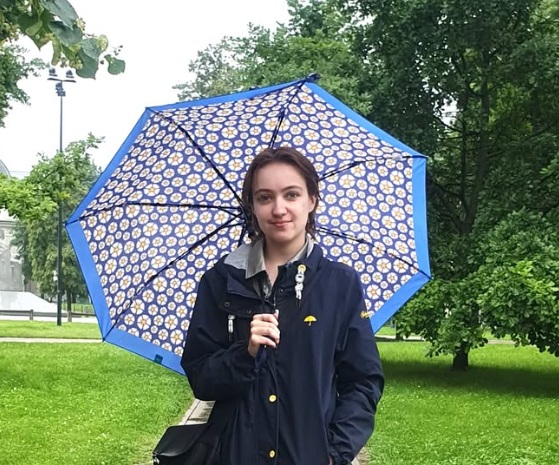
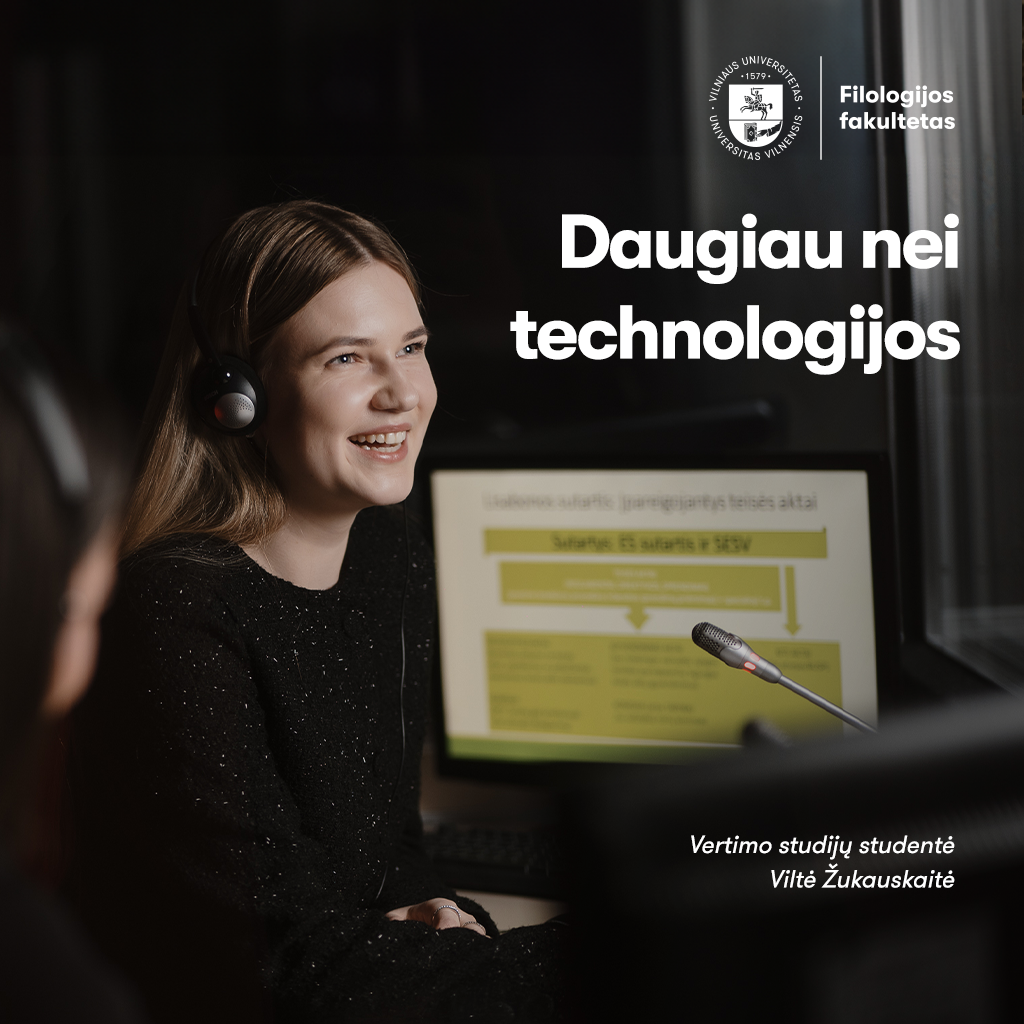
 Yra įvairių įsivaizdavimų apie vertimą kaip mokslą, aš irgi stodama girdėjau visokių komentarų: „ką ten mokytis, jei kalbą moki, tai imi ir verti“. Žinoma, tai netiesa. Realybėje ir vertimo teorija, ir praktika sudėtinga, įvairiapusiška ir įdomi, iškyla tikslumo, autentiškumo, prieinamumo, etikos ir dar visokie klausimai. Todėl siūlau vietoj spėliojimų ateiti pabandyti patiems.