Sidebar

kop copy

Credit: Victoria University

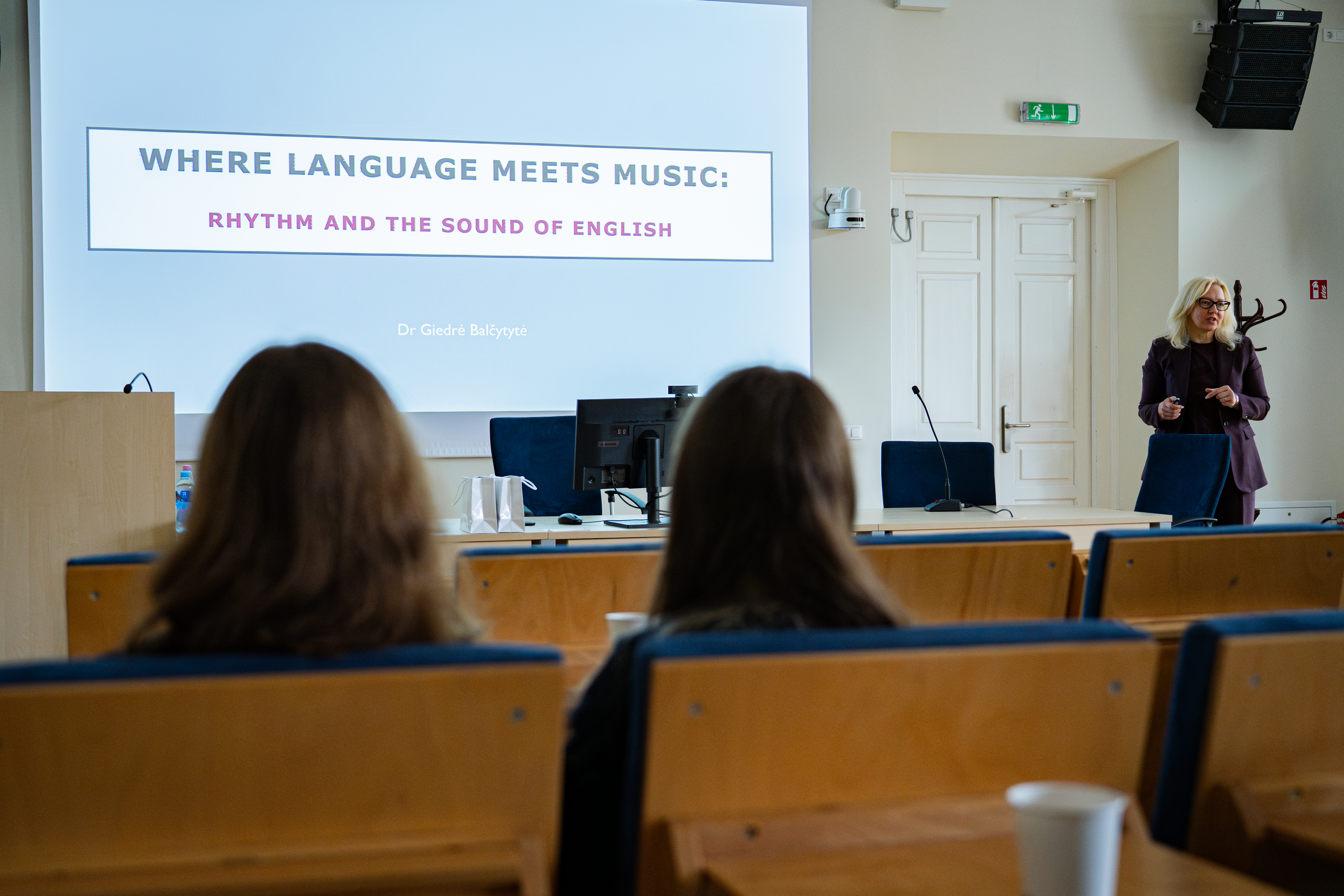
The Faculty of Philology at Vilnius University is pleased to announce that Associate Professor Alexander Maxwell, a renowned New Zealand researcher of linguistic nationalism, will be visiting the Faculty from 1 to 9 December as part of the Erasmus+ programme. He is an associate professor at Victoria University of Wellington and has published extensively on linguistic nationalism and the history of linguistic ideologies, the history of everyday life, particularly nationalized sexuality and the social history of clothing. He also publishes pedagogical articles about teaching history. His broader interests concern nationalism and cultural history in the Habsburg, Romanov, Hohenzollern, and Ottoman Empires and their successor states. He is the director of the Antipodean East European Study Group.

  • 1 Dec. 17.00: "Linguistic Panslavism in the Habsburg State Apparatus", room 314AB;
  • 3 Dec.  9.45: "Vladimir Putin, Normative Isomorphism, and the Language/Dialect Dichotomy", Institute of International Relations and Political Science at Vilnius University (TSPMI), 303 room;
  • 4 Dec. 17.00: "The Myth of Circassian Beauty: Chauvinism, Racism and Sexual Fantasy", room 118 (Krėvės);
  • 5 Dec. 15.00: "Restoring Polylingual nationalism to East-Central European Historiography: Hungary as a case study", Room 314AB;
  • 8 Dec. 17.00: Debate "Limits of lingusitic agnosticism" (with researchers from the Faculty of Philology at Vilnius University, Assoc. Prof Vladimir Panov and Assoc. Prof Vuk Vukotić), "Donelaitis" room;
  • 9 Dec. 17.00: "National Uniforms, Sartorial Sovereignty, and Democratization", room 314AB.

Abstracts:

Linguistic Panslavism in the Habsburg State Apparatus

During the nineteenth century, Slavic savants in the Habsburg Empire routinely posited a single Slavic “language,” implicitly or explicitly downgrading provincial varieties of Slavic to mere “dialects.” This linguistic pan-Slavism, as its advocates described it, inspired nationalist activism and language planning on behalf of individual “dialects.” Habsburg bureaucratic language jargon rarely invoked the language/dialect dichotomy, and instead posited various types of “language” (e.g. Landessprachen, Geschäftsprachen, Dienstsprachen). Nevertheless, job ads, promotion forms, and other bureaucratic documents suggest that belief in a single Slavic language appealed to many different Habsburg officials, including army officers and police inspectors. Linguistic Panslavism evidently influenced not only Slavic intelligentsias, but also the Habsburg state apparatus.

The Myth of Circassian Beauty: Chauvinism, Racism and Sexual Fantasy

Circassian women once had a pan-European reputation for extraordinary beauty. Given the general human tendency toward self-praise, and particularly the racial/national chauvinism widespread in nineteenth-century Europe, popular belief that the world’s most beautiful women came from a Russian-Turkish borderland calls for some explanation. This paper suggests two causes. Firstly, Enlightenment racial “science” and particularly German professor Johann Blumenbach, imagined Circassia as the Indo-European homeland: by praising Circassian women, would-be Aryans were praising themselves. Secondly, Circassia exported women for the Ottoman slave trade, which linked Circassia to European harem fantasies

Restoring Polylingual nationalism to East-Central European Historiography: Hungary as a case study

Many nationalism theorists have depicted East-Central Europe as the homeland of what Tomasz Kamusella calls “ethnolinguistic nationalism,” or alternatively “eastern” or “ethnic” nationalism, forms of nationalism, which unlike the more benign nationalisms of Western Europe or North America, has been characterized by intolerance and chauvinism. This study of Hungarian nationalism, part of a broader comparative project on polylingual nationalism in East-Central Europe, argues that traditional nationalist historiography has neglected polylingual and ethnically tolerant forms of nationalism. Non-Magyar citizens of Hungary espoused what might be called the Hungar nemzet nationalism, distinguishing between “Hungarian” and “Magyar” to show their enthusiasm for Hungary, and sought to replace the monolingual “Magyar Political Nation” with polylingual Hungarian nationalism. This talk traces the intellectual origins of Hungar nemzet nationalism in light of existing historiography, suggesting that it sheds new light on key events of nineteenth-century Hungarian history, notably the 1848 revolution. Scholars should restore polylingual forms of nationalism to their historical understanding of East-Central Europe

Debate: Limits of agnosticism (with researchers from the Faculty of Philology at Vilnius University, Assoc. Prof Vladimir Panov and Assoc. Prof Vuk Vukotić), )

This roundtable starts from the observation that many linguists insist that the language/dialect dichotomy is so poorly formulated as to have no linguistic meaning. When taken to its logical conclusion, this "agnostic" position suggests that no statements can be made as to what is or is not a language. The panel thus considers structural analysis, mutual comprehensibility, and lexicostatistics as three possible techniques for measuring linguistic distance, and assesses their relevance for making claims in terms of the language/dialect dichotomy.

National Uniforms, Sartorial Sovereignty, and Democratization

Before, during, and after the French Revolution, patriots in many different countries had theidea of dressing all members of the nation in a uniform. The idea of a national uniform arosepartly from the sumptuary tradition, but also partly from the uniform mania of the lateEnlightenment. This talk examines a range of schemes for a civilian national uniform,intended to be worn in everyday life by all members of the nation. Analyzing such schemesin light of Benedict Anderson’s definition of the nation as an imagined community imaginedas “inherently limited and sovereign” suggests that the imagined locus of sartorialsovereignty shifts during the French Revolution from the monarch to “the people,” imaginedfirst as the middle classes and subsequently as the peasantry. Clothing reform schemes thustrack the rise of democratic thinking.

We would like to invite everyone to attend the lectures given by the Associate Professor and explore new topics and perspectives.


PXL 20250620 080729988.PORTRAIT copy copy

Gedvilė (in the middle) on her graduation day.

We have some exciting news. Gedvilė Diržiūtė, a Master's graduate in Applied Linguistics at the Faculty of Philology, won the 'Best Master's Thesis 2025' competition organised by the Lithuanian Society of Young Researchers and the Ministry of Foreign Affairs of the Republic of Lithuania, with her thesis 'Language Policy in Families Raising Deaf Children'. Her thesis was selected as the best in the humanities category.

I am delighted to receive this award, which is significant not only to me personally, but also to the sign language community. It is important recognition of my research. I hope it will draw more attention to language policy decisions affecting families with deaf children, encourage closer cooperation between institutions and create broader opportunities for psychological support and counselling for parents. Ultimately, I would like to see language policy decisions that better reflect the needs of deaf children, and cases of language deprivation that become increasingly rare.

Congratulations to Gedvilė and her supervisor, Prof. Dr. Meilutė Ramonienė! Gedvilė is not only an excellent student, but also an athlete – she is currently participating in the Deaflympics in Japan. We wish you every success in achieving your goals!


4 copy copy copy

From 11 to 13 November, Prof. Jurgis Pakerys from the Faculty of Philology visited Yuriy Fedkovych Chernivtsi National University. He met with students studying Lithuanian, participated in a Lithuanian language seminar, gave a lecture and discussed cooperation opportunities with the university's heads and the Faculty of Foreign Languages. The visit was organised by Aliona Shyba, an associate professor in the Department of English at Chernivtsi University who speaks excellent Lithuanian, teaches the language, and is involved in the activities of the Baltic Studies Centre. Thanks to her efforts, many students have had the opportunity to visit and study in Lithuania, and the entire university community has become familiar with her traditional greeting, 'Labas!'.

'Over the past few days, I have heard many heartfelt and beautiful words about the support that Lithuania and its people have shown for Ukraine. Residents of Chernivtsi currently only have 1–2 hours of electricity per day, but life goes on. People are patiently trying to keep things normal: washing cars, sweeping courtyards, attending lectures and seminars. Grandmothers sell fruit and autumn flowers at intersections. Shops and cafés bring out generators and continue to work. In the evening, when it is completely dark, people walk their dogs by the light of torches. Everything seemed safe these days, but that was just a coincidence – air-raid alerts were issued more than once last week.' shares his impressions the Professor, who is currently returning from Ukraine.

Professor J. Pakerys and the Faculty of Philology at Vilnius University encourage everyone to show their support for Ukraine in whatever way they can.

mano copy

Dr. Sergii Gurbych. VU photo.

Following the establishment of the joint Digital Humanities (DH) Laboratory of the Faculties of History and Philology at Vilnius University, researchers have been pushing the boundaries of how historical documents can be studied using modern technologies.

One of the latest outcomes of this work is the Vilne-Yiddish model – a tool for handwritten text recognition (HTR) in the Yiddish language, developed by Dr Sergii Gurbych, a Postdoctoral Fellow at the Center for the Study of East European Jewry, Faculty of History.

The project represents a major step toward making Jewish historical materials accessible through AI. The most recent version of the Vilne-Yiddish model is already available in open access via Dr S. Gurbych’s GitHub repository, and together with the full dataset will be uploaded to Zenodo by the end of his project in February 2026.

Reading What Was Once Unreadable

Dr S. Gurbych explains that while printed Yiddish can already be recognised fairly accurately with existing tools, handwritten texts remain a challenge due to their variety.

“There are many different handwriting styles,” he notes. “They differ by period, region, and even by social background. Currently, scholars working with Yiddish texts manually transcribe dozens of pages from autobiographies, diaries, and letters – a process that is both time-consuming and labour-intensive.

The use of an automated recognition model can significantly accelerate this work by reducing the time required to process each page. While post-recognition manual correction remains necessary due to inevitable errors, the overall effort per page is nonetheless substantially reduced.”

Rediscovering Interwar Jewish Voices

The materials used to train the Vilne-Yiddish model come from autobiographies written in the 1930s and sent to YIVO – the Yidisher Visnshaftlekher Institut – from across Eastern and Central Europe.

Most of these manuscripts, dated between 1933 and 1939, were recently rediscovered in the archives of the National Library of Lithuania and had never been digitised before. Others were obtained from the YIVO online collections digitised through the Edward Blank YIVO Vilna Online Collections Project.

Using these handwritten sources, Dr S. Gurbych created a dataset – a collection of image-text pairs that allowed the model to “learn” the structure of Yiddish handwriting.

“The result,” he says, “is a model that achieves around 95 per cent accuracy – roughly one error per twenty characters. That is quite high for handwritten materials, especially considering the diversity of the scripts.”

Training the Machines to Read

Like any model, Vilne-Yiddish performs best on handwriting styles similar to those it has already seen during training. “The more a new handwriting differs from the samples in the dataset, the higher the error rate,” Dr S. Gurbych explains.

“To build a universal model, we would need hundreds of different handwriting samples – ideally, dozens of pages per style – which requires immense computational resources and time.”

To overcome this challenge, he proposes an alternative approach: fine-tuning.

“If a researcher has a base model and access to the original dataset, they can fine-tune it using just a dozen pages of the handwriting they are studying,” he says. “This way, the model learns that specific handwriting with high accuracy – and it takes much less effort and computing power than training a model from scratch.”

Open Access as a Core Principle

This approach depends on open access. “Both the model and the training dataset need to be freely available,” stresses Dr S. Gurbych. “That’s exactly what this project provides.

While most Hebrew HTR models are closed, the Vilne-Yiddish model and its dataset are both open-access. Anyone can use them, modify them, and build upon them.”

He mentions that the only comparable open project so far has been BiblIA, a dataset developed at the University of Lausanne for medieval Hebrew manuscripts under the direction of Professor Daniel Stökl Ben Ezra. It includes over 200 pages of Sephardic, Ashkenazic, and Italian scripts, and both the dataset and model are available online.

“Now we have something similar for Yiddish – specifically, interwar Yiddish manuscripts. This will help historians and linguists analyse handwritten sources that were previously too complex to process automatically.” says Dr S. Gurbych.

A Step Toward Broader Access

Dr S. Gurbych notes that although several Yiddish HTR models have been developed to date, they are not open-access and were trained on manuscripts of a different type and historical period.

One example is the DYBBUK model, developed under the supervision of Israeli scholar Dr Sinai Rusinek, which was trained on handwritten Yiddish theatre plays from the late 19th and early 20th centuries. Their restricted access prevents other researchers from fine-tuning new models based on these existing ones.“I hope this will contribute to advancing archival research on the history of Jews in Eastern and Central Europe,” he concludes. “Ultimately, Digital Humanities isn’t just about digitisation or data analysis – it’s about expanding access to culture and making the voices of the past legible again.”

Archivists and librarians will be able to convert already-digitised manuscripts from “images only” into fully searchable text. Once transcribed, documents can be indexed, enriched with markup and tags, and published online in a form that supports keyword search and further automated processing. Collections that were previously visible only as scanned pages become accessible sources of structured information.

Opening Doors for Research and Learning

For researchers, large sets of newly recognised texts open the door to modern analytical methods. Tools such as Named Entity Recognition (NER) will allow systematic extraction of place names, addresses, and personal names from handwritten sources.

Instead of manual page-by-page reading, scholars will be able to explore patterns across entire corpora of documents, generating new historical insights.

For the broader public, the model removes a major barrier: knowing Yiddish is no longer required to access the content of handwritten sources. Anyone can copy the recognised text and use an online translation service to understand a document. Letters, autobiographies, and diaries that remained unread for decades will become discoverable to descendants and communities seeking to reconnect with their past.

Educators and students can also incorporate these newly readable manuscripts into teaching and university projects. Working directly with real archival sources supports active learning and broadens engagement with Jewish cultural heritage.

Funded by the European Union and supported by the NextGenerationEU program “New Generation Lithuania.”

The text was prepared by the Faculty of History at Vilnius University.

2 copy copy copy copy copy copy copy

On 3 November, Prof. Dr. Mindaugas Kvietkauskas, Dean of the Faculty of Philology at Vilnius University, welcomed the Turkish Ambassador, H.E. Esra Toplu. 

During the meeting, both sides highlighted the strong and growing collaboration between the Embassy of Turkey and Vilnius University, supported by relevant institutions in Turkey. They emphasised the importance of further joint efforts to promote Turkish language studies and encourage more students – including those learning Turkish as a foreign language and those from Turkey – to join the academic community at Vilnius University.

Ambasadoriai copy

Vilnius University photo

Vilnius University (VU) has opened admissions for international students for the academic year 2026. VU, one of the oldest and most prestigious higher education institutions in Europe, offers students over 70 Bachelor and Master study programmes, along with two prestigious Arqus Joint Master’s Programmes, which provide an opportunity to acquire education in several European countries.

‘Every year, in an ever-growing community, international students discover Vilnius University – an institution that offers not only academic excellence, an active cultural life, and a strong sense of community but also a foundation for professional growth. Vilnius University stands out for the high employability of its graduates. Here, we educate future leaders, providing them with a solid academic foundation and preparing them for successful careers both in Lithuania and internationally,’ said Prof. Rimvydas Petrauskas, Rector of Vilnius University.

This year, VU has welcomed over 750 international students, many of whom chose such popular study programmes as Medicine, Information Systems and Cyber Security, Management, Global Marketing, Software Engineering, and other programmes.

Starting this year, international students will also be able to choose from the following new Bachelor study programmes: Sustainability and Future Societies, Innovative Communication and Entrepreneurship, Economics and Finance, Economics and Management, Language and Artificial Intelligence Management, Bioinformatics, and Italian Philology. The following new programmes are available for students pursuing a Master’s degree: Strategic Economics, Strategic Management of Information Systems, Linguistics: Baltic Linguistics, Laser Physics and Optical Technologies, and Laser Technology.

‘Studying at Vilnius University has been one of the most meaningful experiences of my life. The Marketing and Integrated Communication programme offered a combination I had never found anywhere else – blending creativity, communication, and strategy. It helped me understand how brands grow and how their messages can truly resonate with audiences. The University’s supportive community, both teaching and administrative staff, has made my entire study journey smooth and inspiring. Today, as the Head of Marketing at ‘GrowTech’, I still carry the lessons, mindset, and confidence I gained at VU,’ said Narmin Mammadova from Azerbaijan, who studies Marketing and Integrated Communication at the Faculty of Economics and Business Administration of VU.

Individual studies are also available for international students at VU. Such studies provide students with an opportunity to design their own programmes, enabling those enrolled in a Bachelor or integrated study programme to select some of the course units from any VU unit. This opportunity helps students expand their knowledge, competencies, skills and gain interdisciplinary experience.

Based on this year’s QS University Rankings, VU remains the leading university in Lithuania and stands out for the high employability of its graduates, ranking 93rd worldwide. VU also stands out for its favourable student-to-academic staff ratio and improving scores in sustainability and international research collaborations.

Moreover, Vilnius, home to the University, has been ranked among Europe’s best cities for students. Ranked 23rd by The Campus Advisor, Vilnius combines high-quality studies with an inspiring environment, offering a vibrant cultural scene and an attractive urban atmosphere.

Admissions for non-EU (European Union) and non-EFTA (European Free Trade Association) nationals take place until 1 May, and for EU/EFTA nationals and non-EU/EFTA nationals who can enter under a visa-free 90-day regime – until 1 July. A visa is required for non-EU and non-European Economic Area nationals to study at VU. More information is available here.

Learn more about admissions for international students and submit your application to study at VU here.

 1_copy_copy_copy_copy_copy_copy_copy_copy_copy_copy_copy_copy_copy_copy_copy_copy_copy_copy_copy_copy_copy_copy_copy.jpg

Warmest congratulations to the four Lithuanian philology students of Vilnius University’s Faculty of Philology – Meda Petraškaitė, Tatjana Rodenko, Ieva Staugaitė, and Goda Simaitytė – who have been awarded the Jurgis Mileris Scholarships established by the “Tautos fondas” (Lithuanian National Foundation 'Tautos Fondas' ) based in New York.

The Foundation’s representative in Lithuania, Audronė Kizienė, congratulated the scholarship recipients, expressing her hope that this encouragement will provide additional motivation to pursue new goals in fostering the Lithuanian language.

Lithuanian philology students Ieva Staugaitė and Meda Petraškaitė shared how the scholarships will personally benefit them.

“I, like many other students, not only study but also work, so this scholarship will be a great help, allowing me to dedicate more time to my studies. I will be able to take unpaid leave and focus on writing my bachelor’s thesis. I am delving into linguistics – I am particularly interested in Lithuanian morphology. In my thesis, I also discuss the issue of Lithuanian parts of speech, which remains underexplored. I hope my work will be useful and interesting to a broader audience,” said Ieva Staugaitė.

“I have chosen the path of teaching – I have been pursuing it purposefully since high school. At present, I am doing my teaching practice at a school and also teach Lithuanian individually. Since much of my time is devoted not only to studies and lessons but also to various volunteer activities, this scholarship will allow me to offer free Lithuanian lessons to those who truly need them but cannot afford to pay. This scholarship is a great incentive to continue working for the benefit of others,” said Meda Petraškaitė.

“Tautos fondas,” founded in 1941 in Lithuania and operating in New York since 1955, is supported by private donations aimed at benefiting Lithuania. Jurgis Mileris, whose name the scholarship bears, was a devoted Lithuanian language teacher. After his passing, his son contributed to the fund to continue his father’s mission of supporting young Lithuanian language enthusiasts and encouraging their dedication to their native tongue.

 2_copy_copy_copy_copy_copy_copy_copy_copy_copy_copy_copy_copy_copy_copy_copy_copy_copy_copy_copy_copy_copy_copy_copy.jpg

One of the career paths often chosen by graduates of the Faculty of Philology at Vilnius University is the diplomatic service. This is a natural choice, considering that our graduates usually speak several foreign languages, are well-versed in different cultures, and possess strong intercultural communication skills.

On 27 October, the Faculty of Philology had the honour of welcoming Her Excellency Liz Boyles, Ambassador of the United Kingdom to Lithuania, who met with students of English Philology. The Ambassador spoke about the profession of diplomacy, the experience of being a woman in diplomacy, and shared insights from her service in Syria, Afghanistan, Finland, and the UK’s Permanent Representation to the European Union.

8_copy_copy_copy_copy_copy_copy_copy_copy.jpg

Ambassador Boyles encouraged students to explore careers in diplomacy, to embrace the challenges and opportunities of working in an international environment, and to pursue a meaningful and responsible professional path where knowledge of languages and cultures becomes a key to success.