Sidebar

2 copy copy copy copy copy copy copy

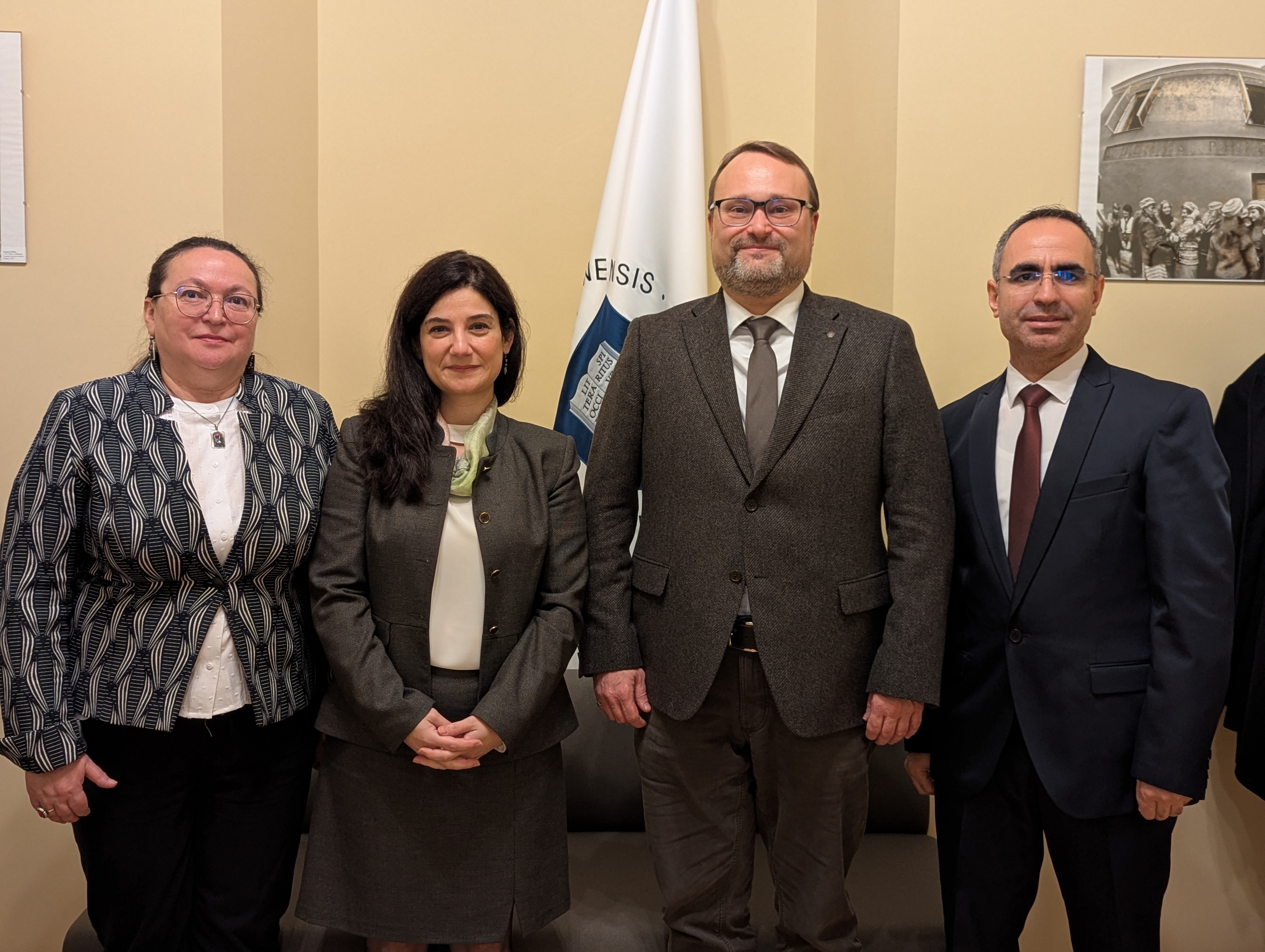
On 3 November, Prof. Dr. Mindaugas Kvietkauskas, Dean of the Faculty of Philology at Vilnius University, welcomed the Turkish Ambassador, H.E. Esra Toplu. 

During the meeting, both sides highlighted the strong and growing collaboration between the Embassy of Turkey and Vilnius University, supported by relevant institutions in Turkey. They emphasised the importance of further joint efforts to promote Turkish language studies and encourage more students – including those learning Turkish as a foreign language and those from Turkey – to join the academic community at Vilnius University.

Ambasadoriai copy

Vilnius University photo

Vilnius University (VU) has opened admissions for international students for the academic year 2026. VU, one of the oldest and most prestigious higher education institutions in Europe, offers students over 70 Bachelor and Master study programmes, along with two prestigious Arqus Joint Master’s Programmes, which provide an opportunity to acquire education in several European countries.

‘Every year, in an ever-growing community, international students discover Vilnius University – an institution that offers not only academic excellence, an active cultural life, and a strong sense of community but also a foundation for professional growth. Vilnius University stands out for the high employability of its graduates. Here, we educate future leaders, providing them with a solid academic foundation and preparing them for successful careers both in Lithuania and internationally,’ said Prof. Rimvydas Petrauskas, Rector of Vilnius University.

This year, VU has welcomed over 750 international students, many of whom chose such popular study programmes as Medicine, Information Systems and Cyber Security, Management, Global Marketing, Software Engineering, and other programmes.

Starting this year, international students will also be able to choose from the following new Bachelor study programmes: Sustainability and Future Societies, Innovative Communication and Entrepreneurship, Economics and Finance, Economics and Management, Language and Artificial Intelligence Management, Bioinformatics, and Italian Philology. The following new programmes are available for students pursuing a Master’s degree: Strategic Economics, Strategic Management of Information Systems, Linguistics: Baltic Linguistics, Laser Physics and Optical Technologies, and Laser Technology.

‘Studying at Vilnius University has been one of the most meaningful experiences of my life. The Marketing and Integrated Communication programme offered a combination I had never found anywhere else – blending creativity, communication, and strategy. It helped me understand how brands grow and how their messages can truly resonate with audiences. The University’s supportive community, both teaching and administrative staff, has made my entire study journey smooth and inspiring. Today, as the Head of Marketing at ‘GrowTech’, I still carry the lessons, mindset, and confidence I gained at VU,’ said Narmin Mammadova from Azerbaijan, who studies Marketing and Integrated Communication at the Faculty of Economics and Business Administration of VU.

Individual studies are also available for international students at VU. Such studies provide students with an opportunity to design their own programmes, enabling those enrolled in a Bachelor or integrated study programme to select some of the course units from any VU unit. This opportunity helps students expand their knowledge, competencies, skills and gain interdisciplinary experience.

Based on this year’s QS University Rankings, VU remains the leading university in Lithuania and stands out for the high employability of its graduates, ranking 93rd worldwide. VU also stands out for its favourable student-to-academic staff ratio and improving scores in sustainability and international research collaborations.

Moreover, Vilnius, home to the University, has been ranked among Europe’s best cities for students. Ranked 23rd by The Campus Advisor, Vilnius combines high-quality studies with an inspiring environment, offering a vibrant cultural scene and an attractive urban atmosphere.

Admissions for non-EU (European Union) and non-EFTA (European Free Trade Association) nationals take place until 1 May, and for EU/EFTA nationals and non-EU/EFTA nationals who can enter under a visa-free 90-day regime – until 1 July. A visa is required for non-EU and non-European Economic Area nationals to study at VU. More information is available here.

Learn more about admissions for international students and submit your application to study at VU here.

 1_copy_copy_copy_copy_copy_copy_copy_copy_copy_copy_copy_copy_copy_copy_copy_copy_copy_copy_copy_copy_copy_copy_copy.jpg

Warmest congratulations to the four Lithuanian philology students of Vilnius University’s Faculty of Philology – Meda Petraškaitė, Tatjana Rodenko, Ieva Staugaitė, and Goda Simaitytė – who have been awarded the Jurgis Mileris Scholarships established by the “Tautos fondas” (Lithuanian National Foundation 'Tautos Fondas' ) based in New York.

The Foundation’s representative in Lithuania, Audronė Kizienė, congratulated the scholarship recipients, expressing her hope that this encouragement will provide additional motivation to pursue new goals in fostering the Lithuanian language.

Lithuanian philology students Ieva Staugaitė and Meda Petraškaitė shared how the scholarships will personally benefit them.

“I, like many other students, not only study but also work, so this scholarship will be a great help, allowing me to dedicate more time to my studies. I will be able to take unpaid leave and focus on writing my bachelor’s thesis. I am delving into linguistics – I am particularly interested in Lithuanian morphology. In my thesis, I also discuss the issue of Lithuanian parts of speech, which remains underexplored. I hope my work will be useful and interesting to a broader audience,” said Ieva Staugaitė.

“I have chosen the path of teaching – I have been pursuing it purposefully since high school. At present, I am doing my teaching practice at a school and also teach Lithuanian individually. Since much of my time is devoted not only to studies and lessons but also to various volunteer activities, this scholarship will allow me to offer free Lithuanian lessons to those who truly need them but cannot afford to pay. This scholarship is a great incentive to continue working for the benefit of others,” said Meda Petraškaitė.

“Tautos fondas,” founded in 1941 in Lithuania and operating in New York since 1955, is supported by private donations aimed at benefiting Lithuania. Jurgis Mileris, whose name the scholarship bears, was a devoted Lithuanian language teacher. After his passing, his son contributed to the fund to continue his father’s mission of supporting young Lithuanian language enthusiasts and encouraging their dedication to their native tongue.

 2_copy_copy_copy_copy_copy_copy_copy_copy_copy_copy_copy_copy_copy_copy_copy_copy_copy_copy_copy_copy_copy_copy_copy.jpg

One of the career paths often chosen by graduates of the Faculty of Philology at Vilnius University is the diplomatic service. This is a natural choice, considering that our graduates usually speak several foreign languages, are well-versed in different cultures, and possess strong intercultural communication skills.

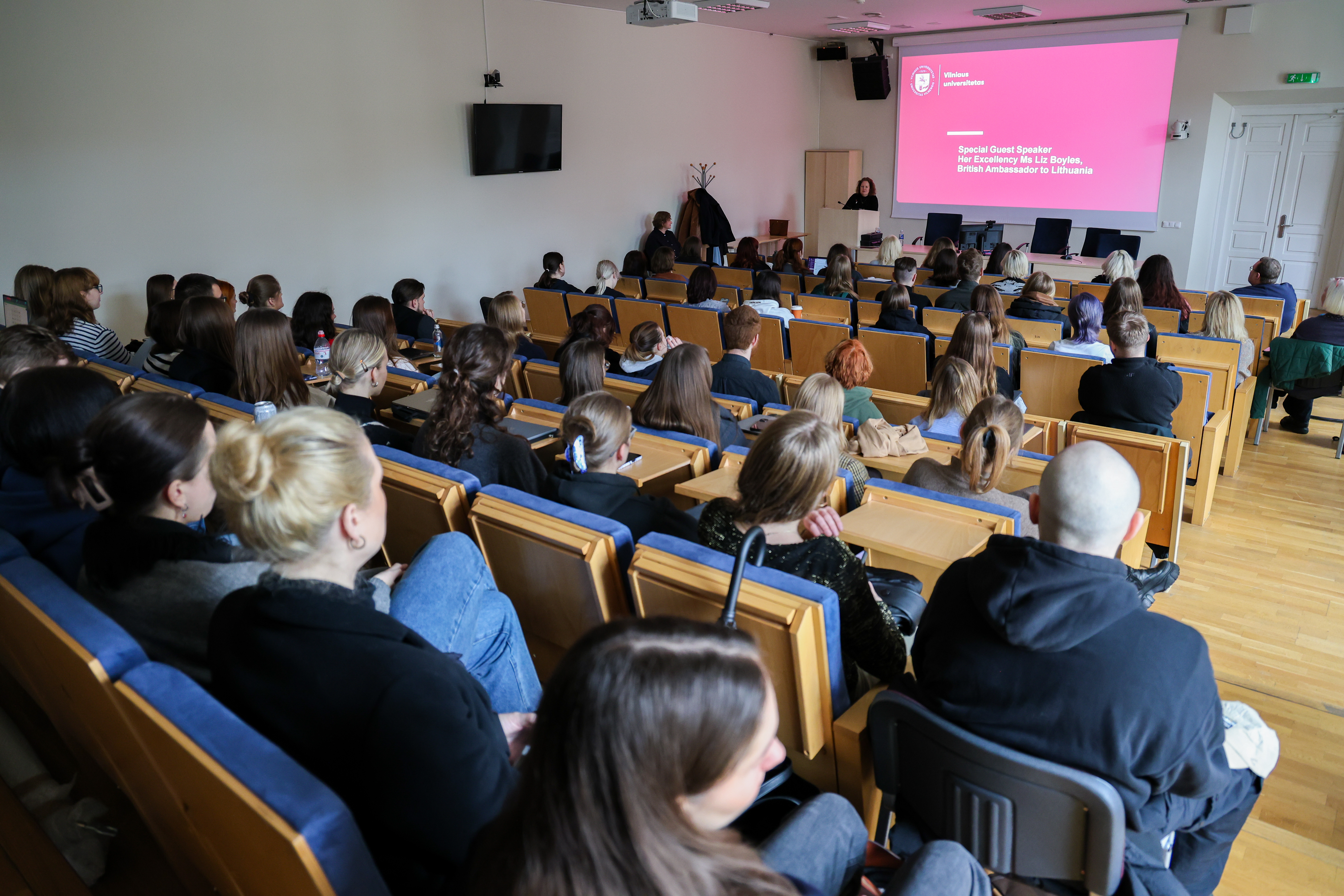
On 27 October, the Faculty of Philology had the honour of welcoming Her Excellency Liz Boyles, Ambassador of the United Kingdom to Lithuania, who met with students of English Philology. The Ambassador spoke about the profession of diplomacy, the experience of being a woman in diplomacy, and shared insights from her service in Syria, Afghanistan, Finland, and the UK’s Permanent Representation to the European Union.

8_copy_copy_copy_copy_copy_copy_copy_copy.jpg

Ambassador Boyles encouraged students to explore careers in diplomacy, to embrace the challenges and opportunities of working in an international environment, and to pursue a meaningful and responsible professional path where knowledge of languages and cultures becomes a key to success.

 2025_09_11-21_copy.jpg

Vilnius University / Ugnius Bagdonavičius photo

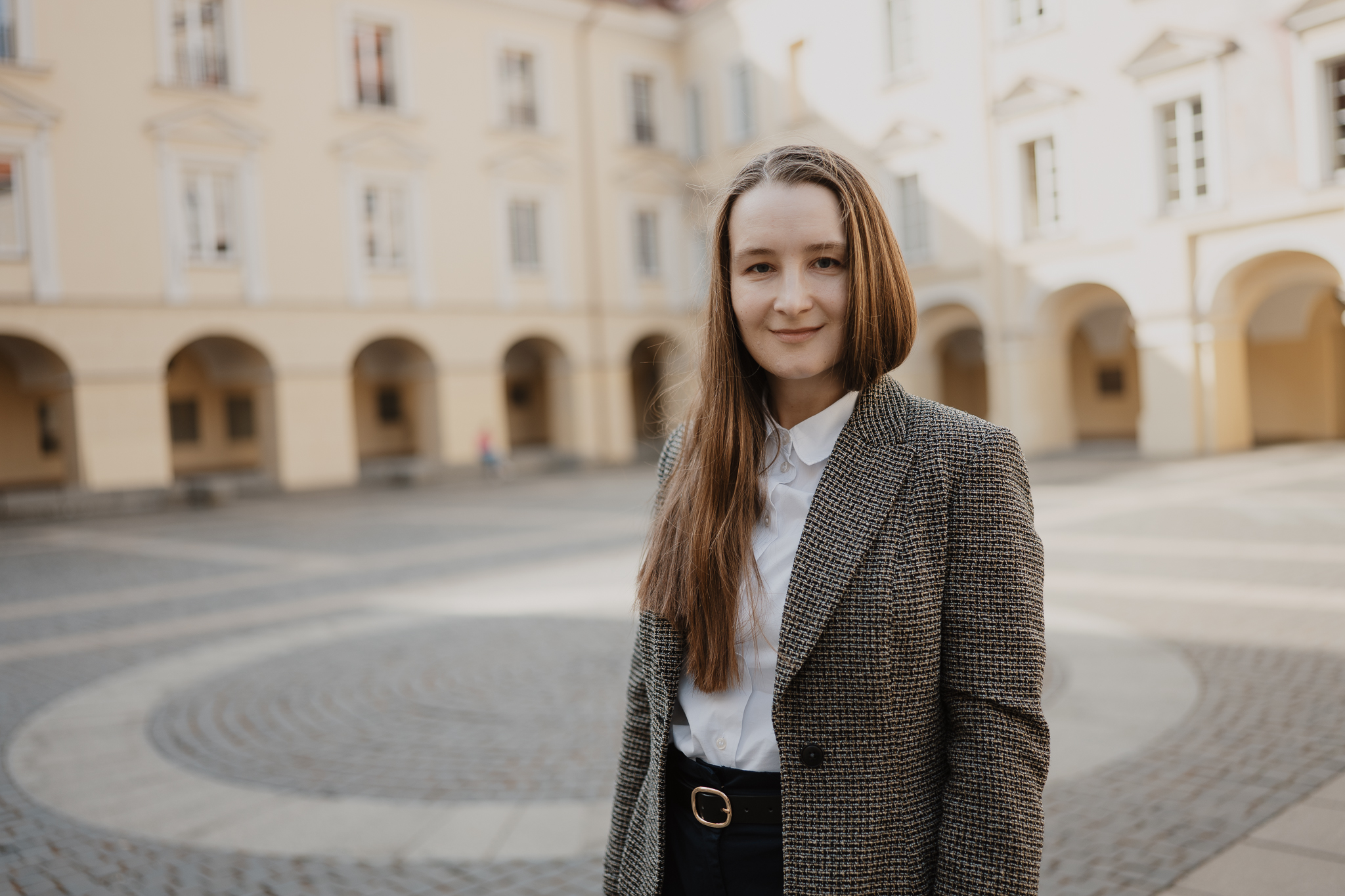
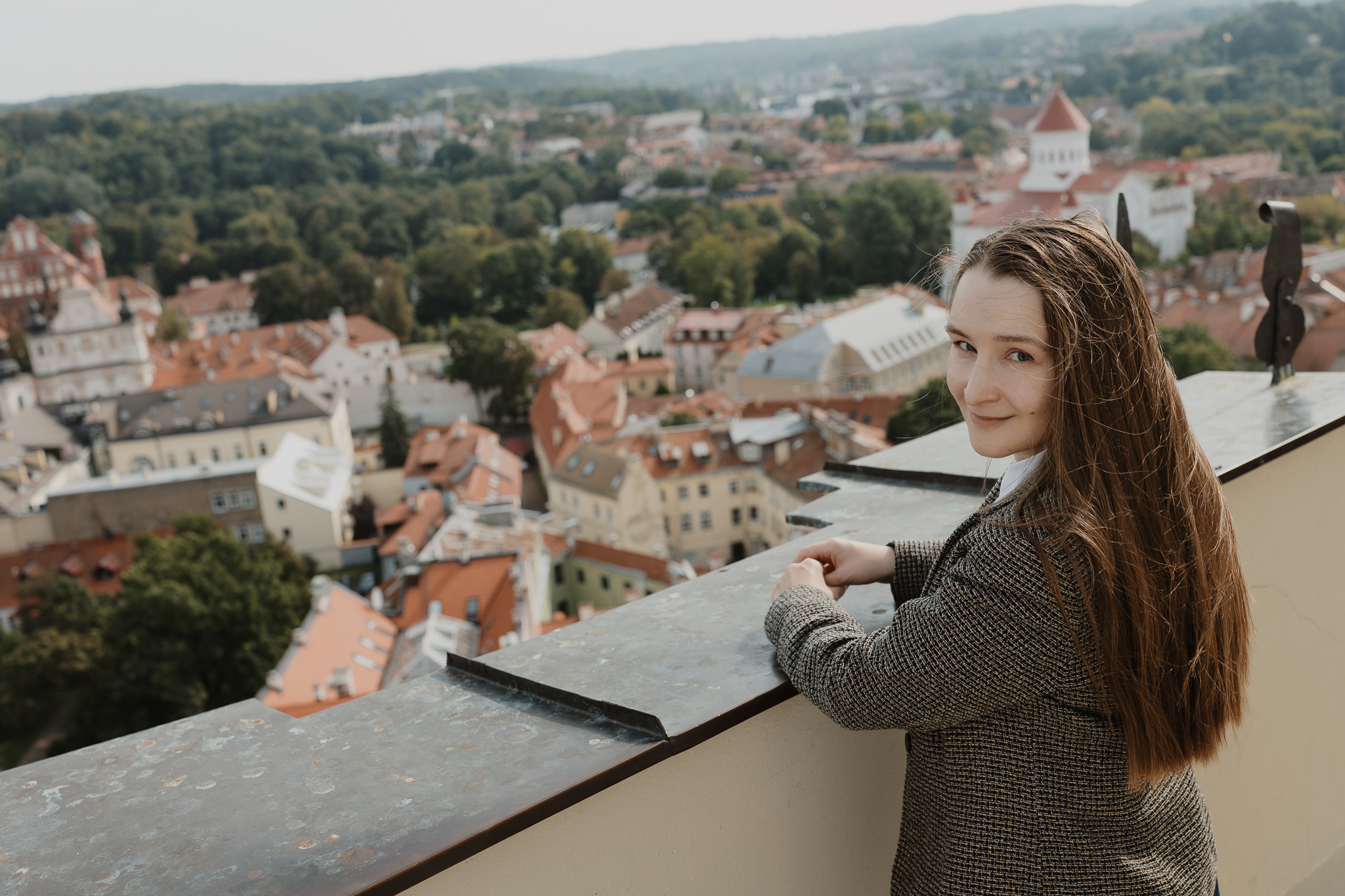
Originally from Kaunas District, Dr Aistė Čelkytė’s love of reading and fascination with Antiquity led her to several prestigious universities around the world. After two decades of academic work abroad, the scholar says she had always hoped to eventually work in Lithuania. Now teaching at the Faculty of Philology of Vilnius University (VU), Dr Čelkytė is delighted by the strong classical philology tradition and the active academic community she feels at the University. She says that it is precisely here that she sees many opportunities for growth. We asked her how she discovered Antiquity, how her studies abroad enriched her, and what knowledge and experience she brought back to Lithuania.

Fascinated by Antiquity since childhood

Growing up in Panevėžiukas (Kaunas District) and completing her basic schooling there, Dr Aistė Čelkytė had plenty of time to read in the quiet settlement, and as she herself says, in her childhood she read “everything that caught my eye.” Although she enjoyed everything as a pupil, when she received Jean-Pierre Vernant’s The Universe, the Gods, and Men: Interpretations of Myths as a gift, she realised that Antiquity and classical philology were what interested her most.

“I was deeply drawn to the precise analysis and, at that time, even astonishing insights of this legendary scholar into the seemingly well-known ancient Greek myths,” the lecturer recalls.

Although a deeper study of Antiquity is only possible with knowledge of Greek or Latin, at that time schools offered no opportunity to learn these languages. Dr Čelkytė says that the ability to learn languages, instilled in her by her English teacher Evelina Jaleniauskienė at Panevėžiukas Basic School, proved very useful later on. When she began studying Ancient World History at Durham University (United Kingdom), she was not daunted either by lectures in English or by learning Greek and Latin.
2025_09_11-1_copy.jpg

Vilnius University / Ugnius Bagdonavičius photo

Soon she became interested in the philosophers of Antiquity as well. While attending a lecture on early Greek philosophers at Durham University, the young student was captivated by the surviving fragments of ancient thinkers’ works preserved only in excerpts. At first, they intrigued her with their strangeness, and later with their complexity. For instance, one fragment by Thales declares that everything in the world is water.

“I was very intrigued by the fact that such fragments can be ‘decoded,’ revealing attempts to explain natural phenomena – in this case, natural change,” says Dr Čelkytė.

It was precisely this “decoding” of ancient thought, reminiscent of detective work, that fascinated and deeply engaged her. To this day, her academic research often revolves around fragmented sources and lesser-known figures of Antiquity.

The Stoic Concept of Beauty

Later, at the prestigious University of St Andrews in Scotland – one of the world’s leading centres for the study of ancient philosophy – the scholar successfully defended her dissertation on the Stoic concept of beauty. Based on this research, a monograph was later published by an Edinburgh press. When asked how the Stoics understood beauty, Dr Čelkytė explains that the Stoic conception of beauty consists of two parts. The first is proportionality (Greek: summetria).

“Proportionality was perhaps the most important concept in Greek art as early as the fifth century BC, after the sculptor Polykleitos discovered which proportions made sculptures appear most beautiful. The Stoics, like many other philosophers, first define beauty as proportionality,” the scholar notes.

“The second part of their concept of beauty is the functional aspect of beauty: beauty is not an abstract proportionality, but proportionality appropriate to the function of a thing or a person,” she explains.

Such an understanding of beauty was not only innovative but also particularly fitting for philosophers concerned with ethics and the beauty of the soul. “According to the Stoics, the most beautiful people are the sages, because their completely harmonious and proportionate beliefs mean that they are entirely rational – and being rational is the nature and function of human beings,” the scholar remarks with admiration.
2025_09_11-6_copy_copy.jpg

Vilnius University / Ugnius Bagdonavičius photo

Incidentally, the cover of Dr Aistė Čelkytė’s monograph features Mikalojus Konstantinas Čiurlionis’s Sonata of the Stars. The lecturer says she sees many connections to philosophy in Čiurlionis’s work, as it explores numerous thought-provoking themes – for instance, world creation and divinity. According to Dr Čelkytė, the Stoics would appreciate not only the aesthetic value of Čiurlionis’s paintings and music but also their philosophical dimensions.

Dr Čelkytė has completed postdoctoral research projects in South Korea and the Netherlands, and her research topics are remarkably diverse: ancient biology, medicine, cosmology, and economic theory. Recently, her second book was published – on the Roman physician Galen and his conception of the body.

When asked why it is still relevant today to study the natural sciences of Antiquity – whose knowledge might seem outdated – she insists: “Nothing has made me appreciate modern science, especially medicine, more than studying ancient science.” At the same time, she adds that she would not recommend ancient medicine to those who wish to learn how to heal. “If you are interested in questions about the nature of science, its methodology, and how scientific progress happens – or doesn’t happen – there is no better source than the history of science.”

Moreover, she notes, not everything in ancient science is obsolete. A question that remains highly relevant today – whether physicians should base their diagnoses and treatments on the latest research and statistics or on personal experience – was already at the centre of debates among ancient rationalists and empiricists. “The former relied on theoretical conceptions of the body, while the latter claimed that only the doctor’s own experience is a truly reliable way to help patients,” the researcher explains.

Back to Lithuania

Although Dr Čelkytė says she did not have any concrete plans to return to Lithuania, she always hoped that she would eventually work here. So, when the opportunity to teach in Vilnius arose, she immediately seized it.

“Vilnius University is especially appealing for its very old and impressive tradition of classical philology, as well as its truly sizeable community of classicists, many of whom are very active colleagues. Here I see many opportunities to grow and develop as a scholar and lecturer,” says the researcher, who sees her future in Lithuania.

Asked whether twenty years of experience abroad changed her perception of her homeland, she replies that Lithuanians often place very high demands both on themselves and on Lithuania. In her view, although this is not bad in principle, high expectations also bring negative comparisons and overly critical evaluations, which are not always justified.

On the other hand, she acknowledges that while there are areas where she would like to see more progress, she now understands much better that “the occupation left many wounds that are still healing – and healing takes time.”

Having been rediscovering Lithuania since September, the researcher and lecturer at Vilnius University’s Faculty of Philology says she especially values her students’ curiosity and creativity. In her teaching, she prioritises active learning methods and promises her students plenty of discussions. She will be giving lectures on conceptions of the body in Antiquity for bachelor’s students, and on women in the Greek intellectual tradition for master’s students. The lecturer hopes that some of them will become so engaged with these topics that they will be inspired to undertake translations. “It would be wonderful if more texts – for example, those of Hippocrates – were available in Lithuanian,” she shares.

570113006_1335428101869910_3822014052477014455_n_copy_copy.jpg

Hanna Holub photo

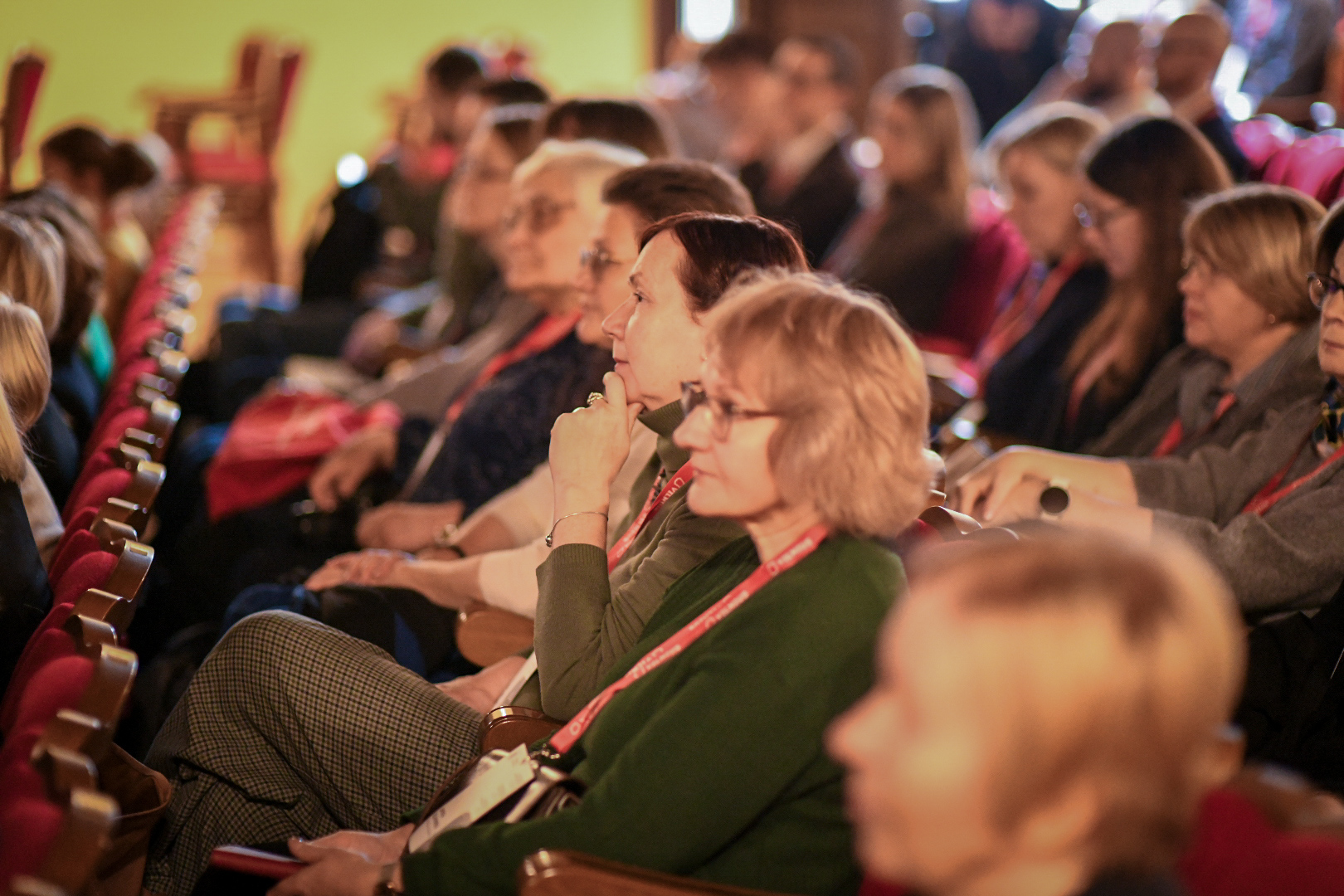
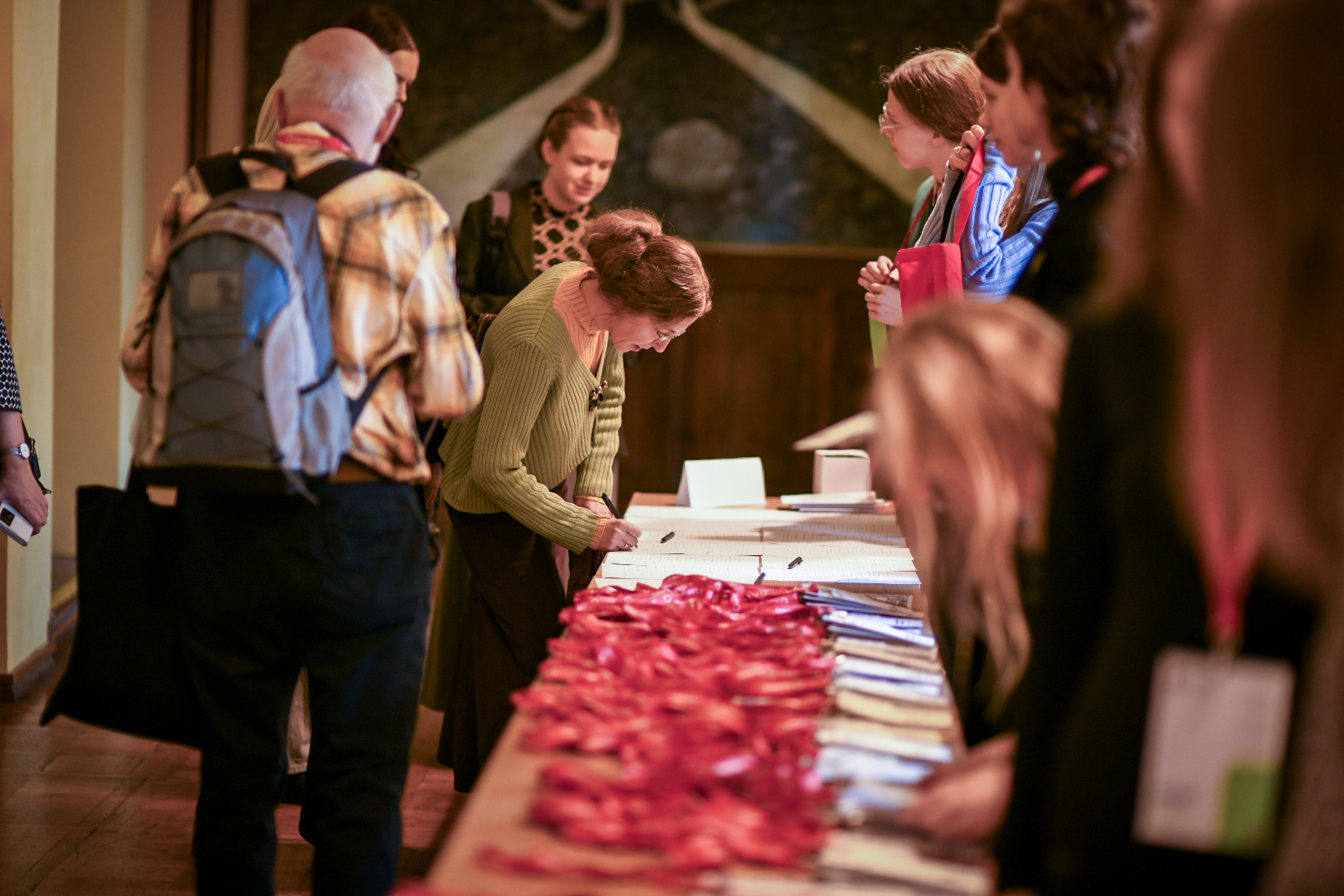
Today, Vilnius University hosted the opening of the 14th International Congress of Balticists – the most significant event in the field of Baltic languages and literature. This year, the congress brings together more than 170 authors from sixteen countries: Lithuania, Latvia, Poland, Finland, Sweden, Italy, Germany, the Czech Republic, Austria, France, Switzerland, the Netherlands, the United Kingdom, the United States, Estonia, and Japan.

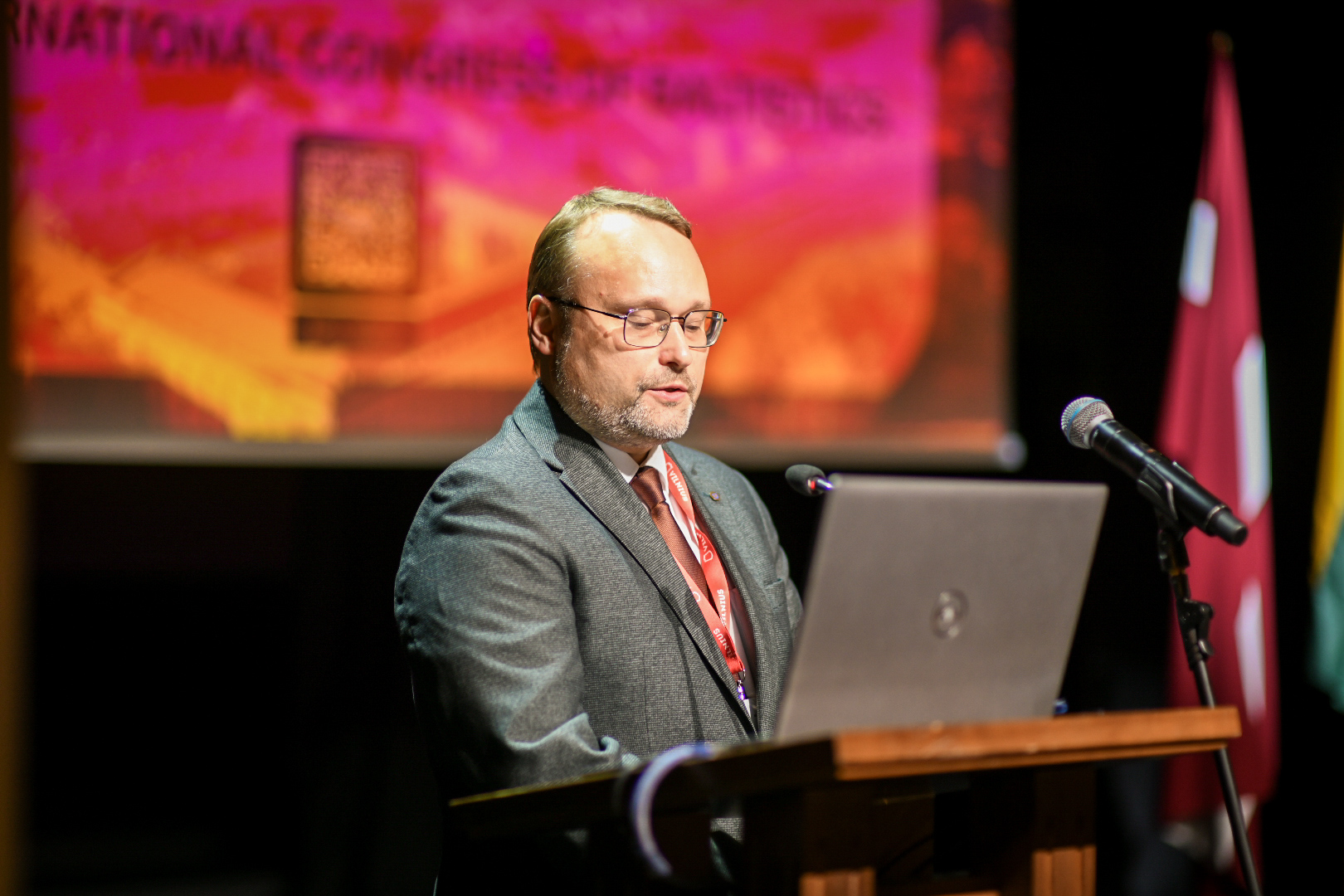
The Dean of the Faculty of Philology, Prof. Dr. Mindaugas Kvietkauskas, welcomed the large and diverse international community of Baltic Studies researchers, wishing them inspiring cooperation and new scientific breakthroughs.

568673115_1335426491870071_9118082761525135444_n_copy.jpg

Hanna Holub photo

“May this 14th International Congress of Balticists serve not only to disseminate the latest research, but also to shape the future of Baltic Studies. May it inspire new academic discoveries, joint projects, exchanges, and ideas for strengthening our study programmes. Let this congress also reaffirm our belief that the greatest challenges can be overcome when we are guided by the meaning and purpose of our work. The Baltic nations and the field of Baltic Studies have proven this many times in the past and will continue to do so in the future. Vivat baltistica!” said Prof. Dr. Mindaugas Kvietkauskas.

568644257_1335427781869942_1622237697801642947_n_copy.jpg

Hanna Holub photo

The International Congress of Balticists will continue at Vilnius University until 25 October.

PXL_20240923_094823635_copy.jpg

The Faculty of Philology is delighted to be partnering with Nordclinic Group and invites Faculty students to take part in the Faculty Partners competition for a chance to win a one-time nominal scholarship worth €500.

Nordclinic Group has established two scholarships, each worth €500. One will be awarded to a student of English Philology and the other to a student of Scandinavian Studies.

The competition is open to third- and fourth-year Scandinavian Studies and English Philology students with no academic debts and a spring semester average of at least 9.

Those wishing to participate are invited to submit a free-form application via the information system (is.vu.lt) by 21 November, including a short statement of motivation of up to 300 words.

The scholarship award committee will inform successful applicants of its decision by 5 December.

20_copy_copy_copy_copy.jpg

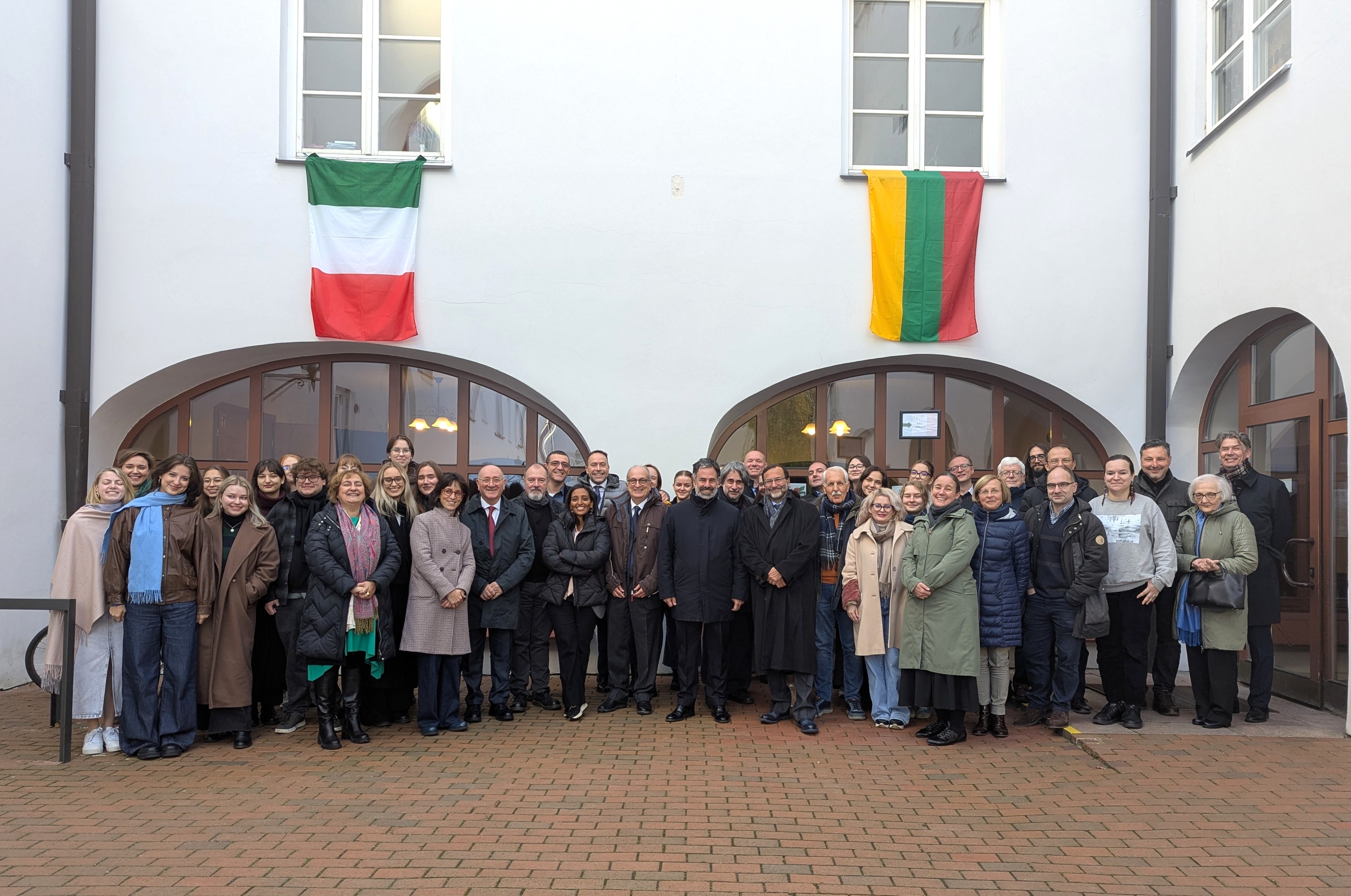
The Faculty of Philology at Vilnius University was honoured to host the opening of the 25th Week of the Italian Language in the World (Settimana della Lingua Italiana nel Mondo). The event brought together distinguished guests – scholars, writers, and cultural figures – from various regions of Italy.

The participants were welcomed by the Heads of the Italian and Swiss Embassies, Dr Artūras Vasiliauskas, Vice-Rector for Partnerships at Vilnius University, and Dr Giedrius Tamaševičius, Vice-Dean for Science and Strategic Development at the Faculty of Philology.

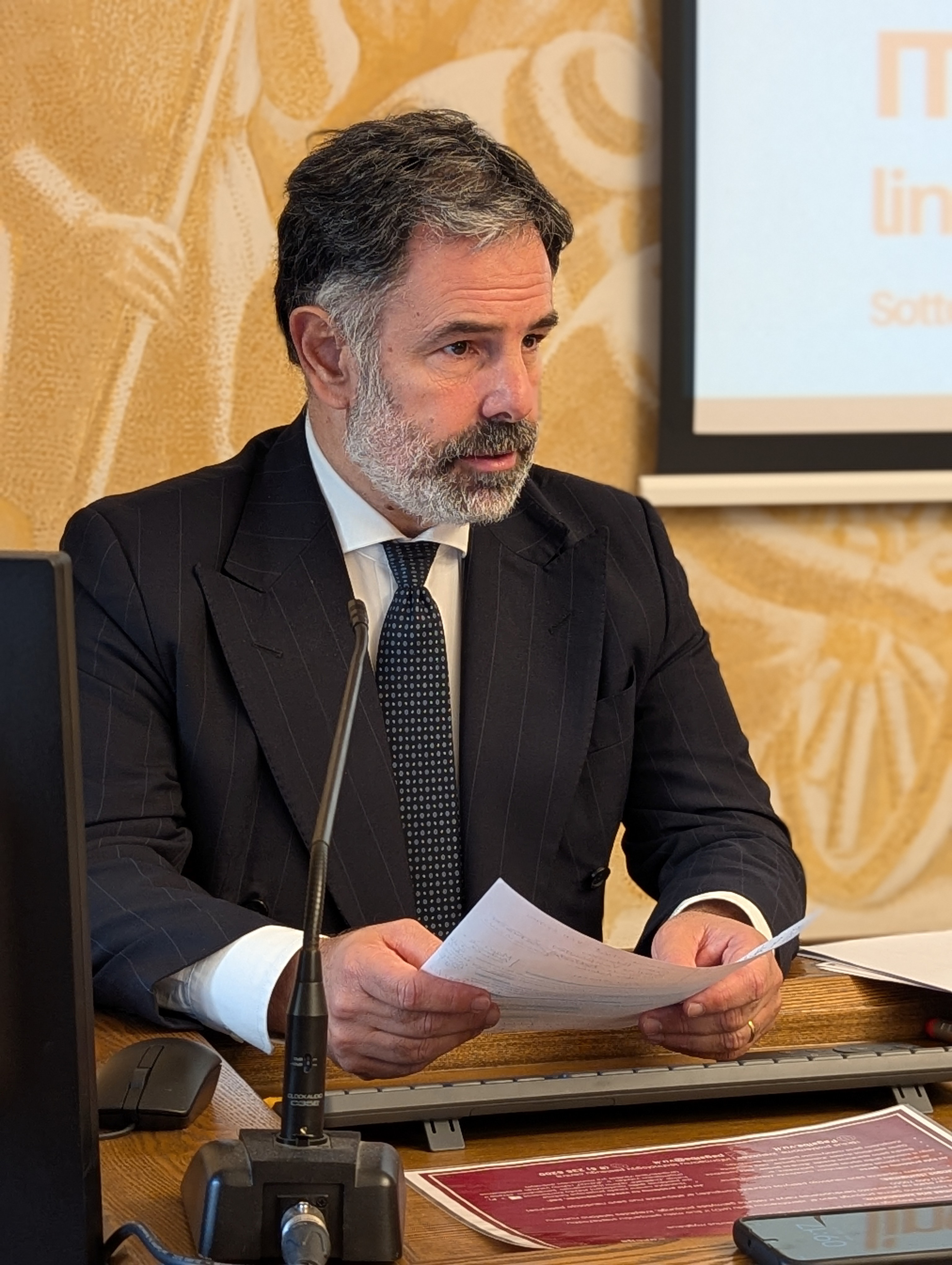
In his address, Italian Ambassador Emanuele de Maigret quoted Antonio Tajani, Italy’s Deputy Prime Minister and Minister of Foreign Affairs and International Cooperation:

“The Italian language is not only a witness to our past; it is also a language that shapes the future. It is increasingly used in business and associated with development. It is also an instrument for creating peace and dialogue,” – noted the Ambassador.

25_copy.jpg

Dr Giedrius Tamaševičius highlighted the evident influence of the Italian language and culture in Lithuania. He emphasised the Faculty’s contribution to promoting the future of Italian studies, including the popularisation of Italian philology and the strengthening of Italian as a potential second foreign language in Lithuanian schools.

The event programme can be found at the following link >>