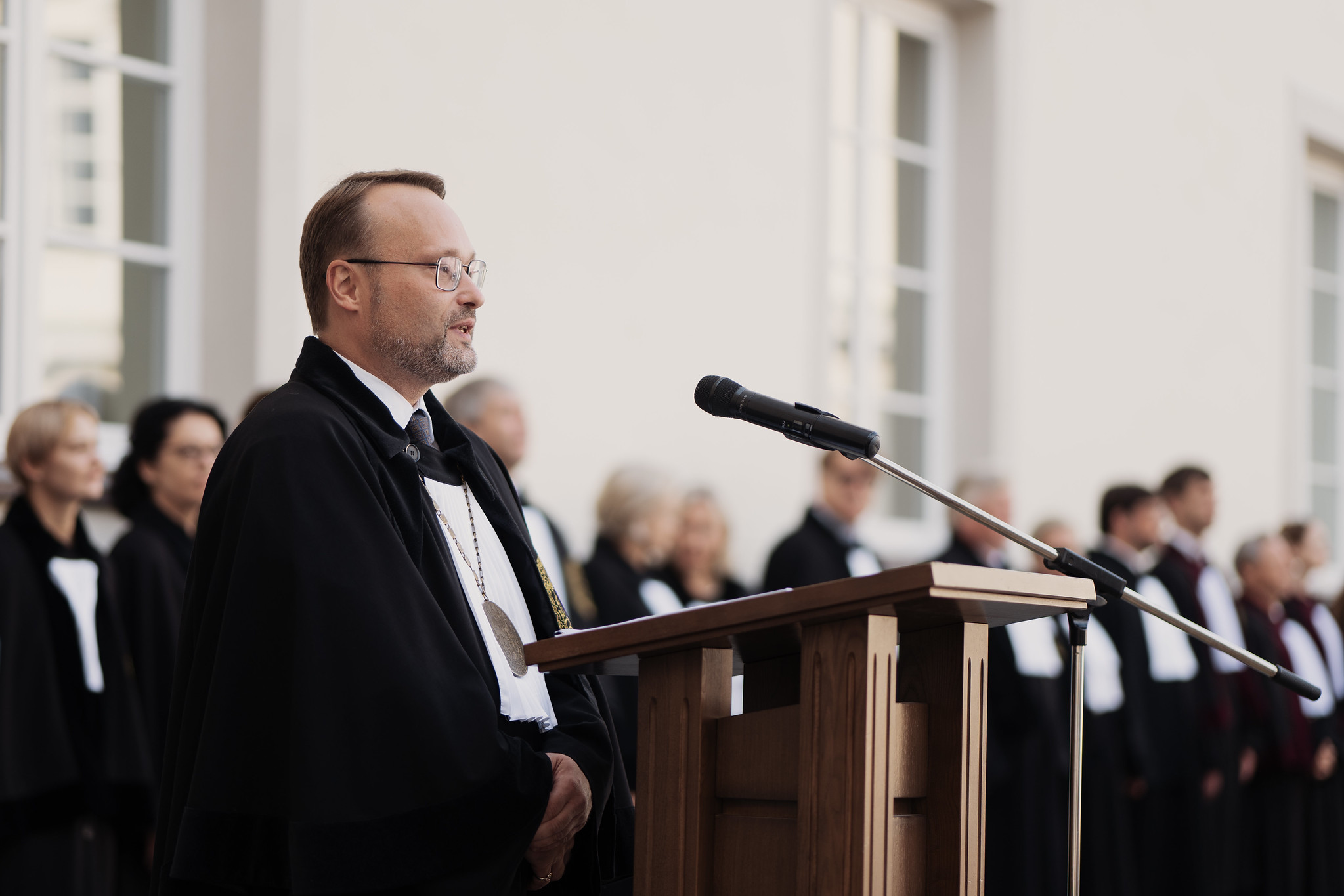
Vilniaus universitas / Ugnius Bagdonavičius
Magnificencija Rektoriau, garbieji Universiteto vadovai, kolegos dekanai, brangioji bendruomene,
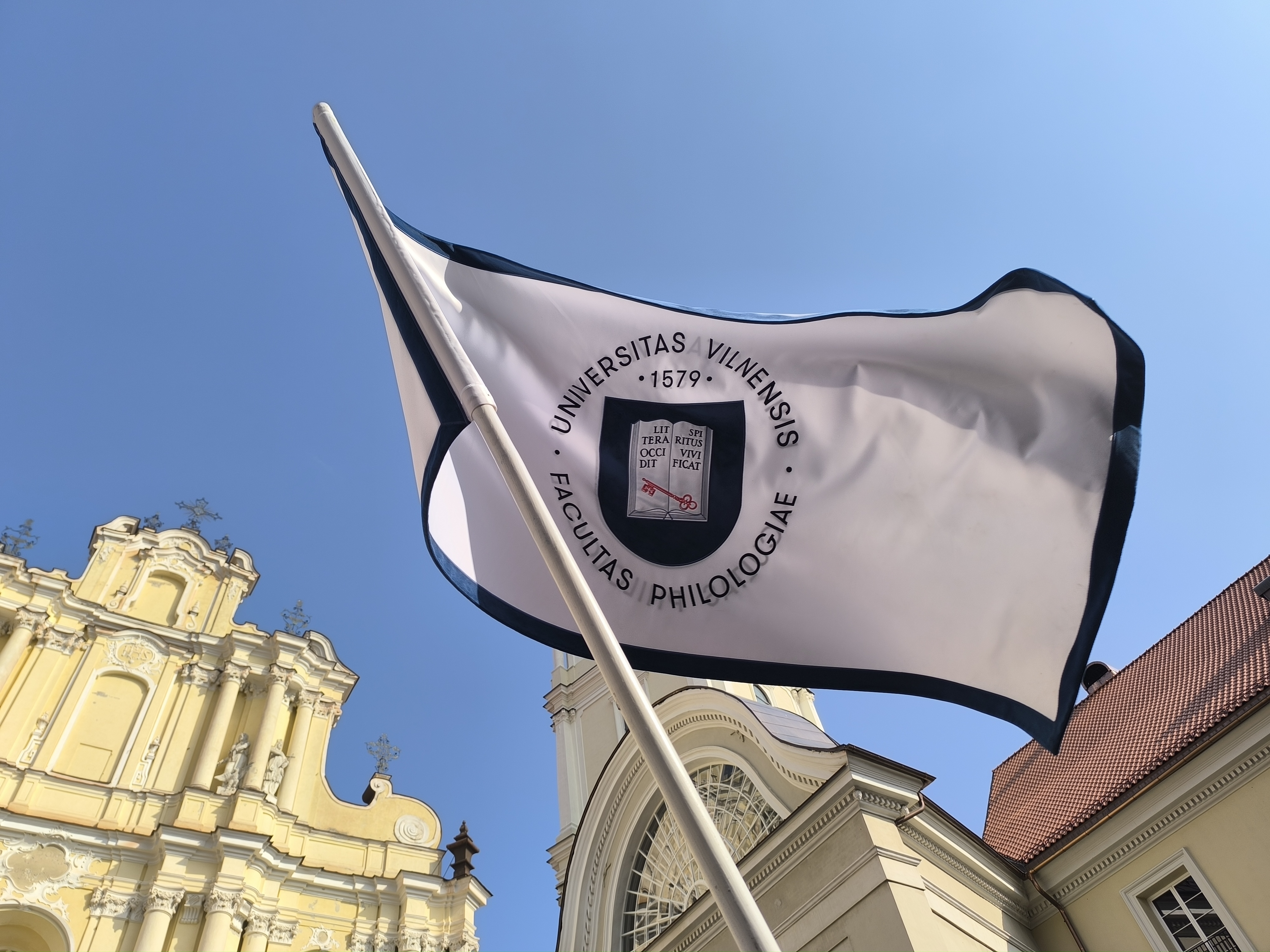
pradėdami universiteto akademinius metus, kaip kaskart atsigręžiame į mus vienijančias tradicijas, principus ir simbolius – universiteto vėliavą, himną „Gaudeamus“, iškilmingas lotyniškas frazes, universiteto šūkį – „Hinc itur ad astra“. Visai neseniai fakulteto pirmakursių stovykloje mačiau, kaip studentų atstovybė moko fuksus sušukti šią frazę iškėlus smilių aukštyn, štai taip: „Hinc itur ad astra!”. Kaip puikiai žinome, minėta frazė susijusi su astronomija ir užrašyta ant senosios observatorijos fasado. Tai dalis ilgesnio lotyniško dvieilio, kurį sukūrė VU rektorius, astronomas, fizikas, matematikas, politikas ir poetas, universalus Apšvietos laikų intelektualas Martynas Počobutas. “Haec domus Uraniae est: Curae procul este profanae: Temnitur hic humilis tellus: Hinc itur ad astra" (“Šis namas Uranijos: dinkit, niekingi rūpesčiai! Čia nepaisoma Żemės menkumo: iš čia kylama į žvaigždes”). Iš tiesų šiame dvieilyje Počobutas sutalpino kur kas platesnę, ne tik astronomijos tyrimų, prasmę, juolab, kad jame subtiliai parafrazavo Vergilijaus „Eneidą“, joje dievo Apolono ištartus žodžius („sic itur ad astra“ – „taip kylama į žvaigždes“), skirtus mūšio lauke atlikusiam didžiulį žygdarbį jaunuoliui. Počobuto eilėse užkoduota mintis, kad universitete siekiama peržengti įprastinius kasdienybės rėmus, išplėsti žmogiškojo mąstymo horizontus, įveikti savo pačių ribas, pakilti aukščiau, nei vidutinybė, tobulinti save. Idėja, kad universitetas – tai minties mūšio laukas, kuriame nuolat kuriasi nauja ateitis.
Pasitinkant naujuosius mokslo metus, norisi viltis ir linkėti, kad universitete turėtume kuo daugiau ryžto ir kuo geresnių galimybių susitelkti prie esminių minties mūšių, prie abipusio studentų ir dėstytojų tobulėjimo, o žemiškus reikalus tvarkytis taip, kad jie mus ne slopintų, bet keltų ir leistų dažniau susitikti Uranijos ar kitų mūzų namuose, kaip pasakyta Počobuto. Kaip tai pasiekti dabartyje, šiais Viešpaties metais, šioje situacijoje, šiame politinių kovų ir socialinio gyvenimo kontekste, tarp šių iššūkių ar šios biurokratijos – tai atviras klausimas kiekvienam. Vienoje esminių knygų apie Europos universitetų vaidmenį, kuri vadinasi „Universiteto idėja“, jos autorius, vokiečių egzistencializmo filosofas Karlas Jaspersas teigia, kad universiteto būklė valstybėje visuomet yra iki galo neapibrėžta, ribinė, nes universitetas kiekvienoje visuomenėje turi derėtis dėl savo teisės būti kitoniška, alternatyvia, autonomiška bendrija, kurios pagrindinis tikslas – pažinimo laisvė. Niša universiteto veiklai, anot Jasperso, atsiranda tik tada, kai politinis kūnas – Hobbeso Leviatanas – sutinka savo paties labui apsiriboti ir palikti savyje tuščią erdvę tiesos pažinimui. Erdvę, kurioje gali skleistis ir klausimo laisvė, ir tolerancija klaidai, ir siekis grumtis su kvailybe, ir gebėjimas suabejoti savo pačių teisumu, ir dar daugiau – tikėjimas, kad žmogaus sąmonei ir visuomenei būtina tobulėti toliau, nepaisant visų atkryčių ir klaidų.
Naujame Vilniaus universiteto alumno, poeto Tomo Venclovos eilėraščių rinkinyje „Už Onos ir Bernardinų“, kurį laikau šių metų literatūros įvykiu, yra nuostabus universitetui skirtas eilėraštis pavadinimu „Počobuto observatorija“. Norėčiau kaip palinkėjimą mums visiems pacituoti šio eilėraščio pabaigos eilutes:
„Miestas triūsė, ilsėjos, puotavo, kaip kiekvienas miestas nuo amžių pradžios, ir juto, kad jis tik apsimeta.
Tačiau ant pusapvalių bokštų už neeuklidinio fasado švytėjo Zodiako ženklai.
Netikėjau, kad jie nulemia mūsų likimą, bet žinojau – žvaigždynai vyresni už mus ir gyvuos ilgiau už vergiją.
Jie skelbė kitokią – ne vienodumo, ne melo, ne kerštavimo tvarką. Keisti padarai visatos sode, laimingi žvėrys ir žmonės, pažinę stebuklą.
Tik tiek ir atsinešiau iš praeities. Virš naujosios žolės – Liūtas ir Žuvys, Dvyniai ir Mergelė.”
Tegu mūsų universiteto bendruomenės darbai naujaisiais mokslo metais sustiprins tų žvaigždžių, į kurias siekiame kilti, šviesą.
Prof. dr. Mindaugas Kvietkauskas
VU Filologijos fakulteto dekanas